

Paired Accelerator
Paired Accelerator
Shopify & Netsuite
The Shopify & NetSuite Accelerator is a pre-built integration package that synchronises key commerce and operational data between your Shopify ecommerce CMS and Oracle NetSuite ERP.
Patchworks is Shopify’s only Certified Technology Partner for integrations. We connect Shopify and Shopify Plus to the ERP, warehouse, marketplace, accounting and CRM systems retail brands run on, so orders, stock, customers and fulfilments move automatically across every store and channel, on an integration platform (iPaaS) trusted by 1,700+ brands.
A Shopify Plus Partner since 2015. Start with a prebuilt accelerator, or build exactly what you need with AI Studio.

Supporting complex retail operations across fast-growing brands












| Item |
|
|---|---|
| Shopify credential |
Shopify’s only Certified Technology Partner for integrations, and a Shopify Plus Partner since 2015
|
| Connector |
The Patchworks app in the Shopify App Store installs an authenticated Shopify connector in one step
|
| Shopify API |
Shopify GraphQL Admin API, with predefined endpoints for orders, products, customers and more, plus custom GraphQL queries
|
| Authentication |
App install (recommended) or Admin API access token
|
| Shopify plans and features |
Shopify and Shopify Plus, including multiple and expansion stores, B2B, Markets and POS
|
| Connects Shopify to |
Any system with an API or MCP server, through a prebuilt connector or one built in minutes with AI Studio
|
| Prebuilt accelerators |
Shopify & NetSuite, Shopify & Brightpearl, Shopify & Virtualstock, Shopify & Sage Accounting
|
| Triggers |
Scheduled, webhook, callback and event-driven process flows
|
| Security |
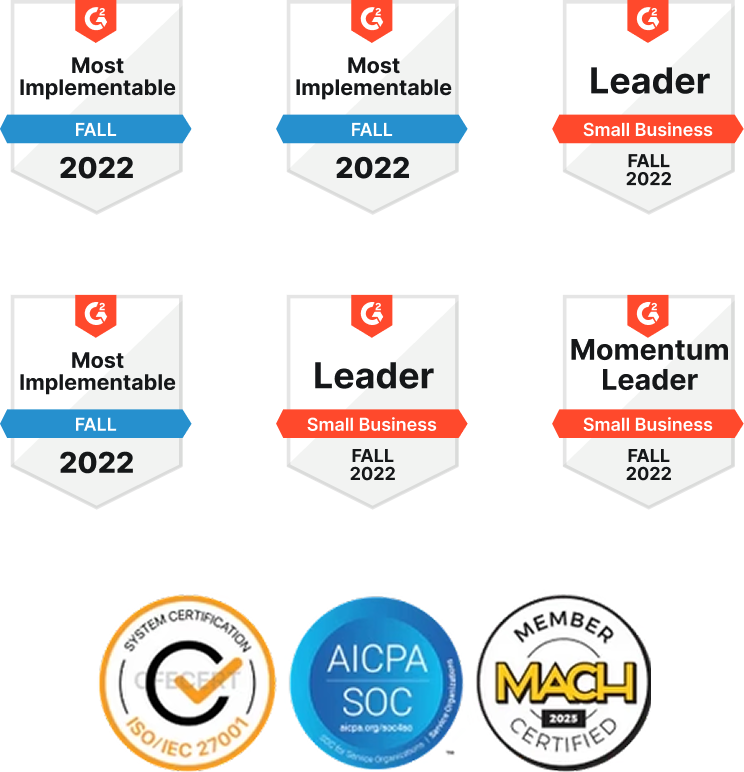
SOC 2 and ISO 27001
|
| Pricing |
Based on connected systems and monthly operations, with unlimited users
|

Our Shopify ERP integration sends orders from every Shopify store into NetSuite, Microsoft Dynamics 365 Business Central, Sage, SAP or Brightpearl, then publishes stock, prices and fulfilments back to Shopify. Finance and operations work from the ERP, and Shopify always shows the right numbers.
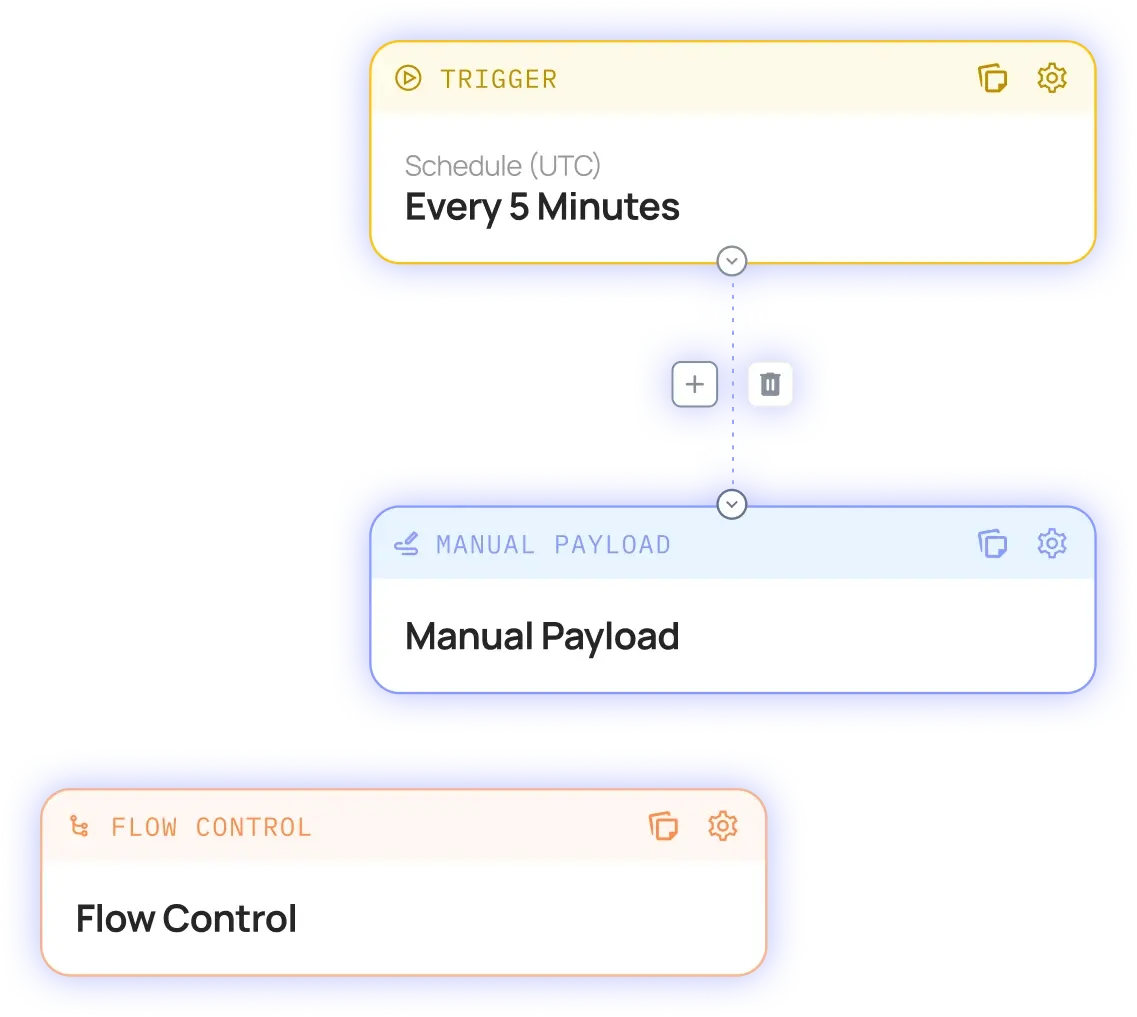
Connect Shopify to your WMS or 3PL, including Descartes Peoplevox, GXO, Huboo and ShipBob. Orders reach the warehouse as they’re placed, and tracking flows back to Shopify and your customer. Because the 3PL sits on its own connection, you can switch provider without replatforming. Castore completed a full 3PL migration in eight weeks.
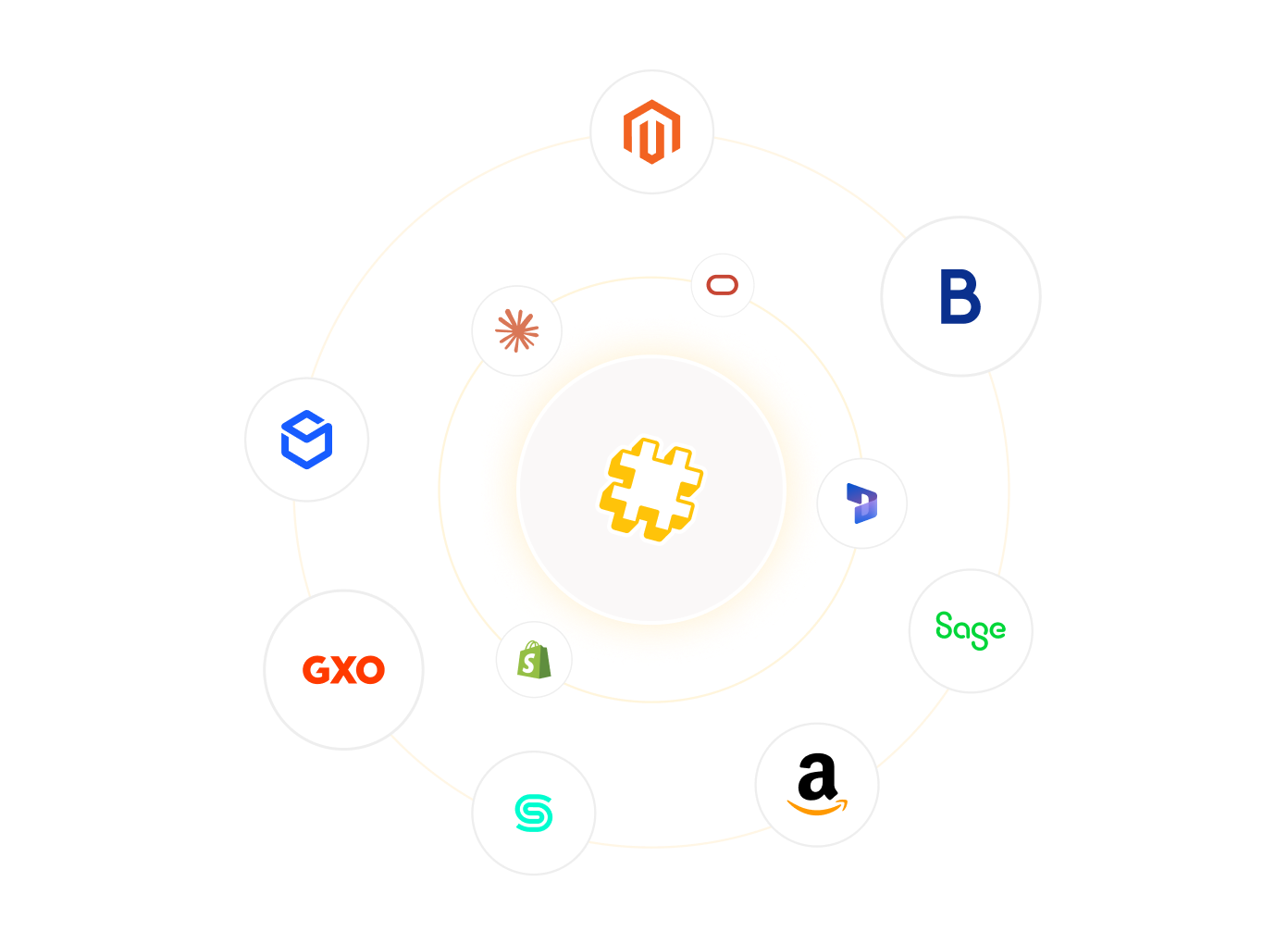
Sell on Amazon, eBay and TikTok Shop from the same stock pool as your Shopify store, and connect retailer dropship networks such as Rithum and Virtualstock. Wholesale orders from EDI trading partners land alongside DTC, so one integration layer runs every channel.
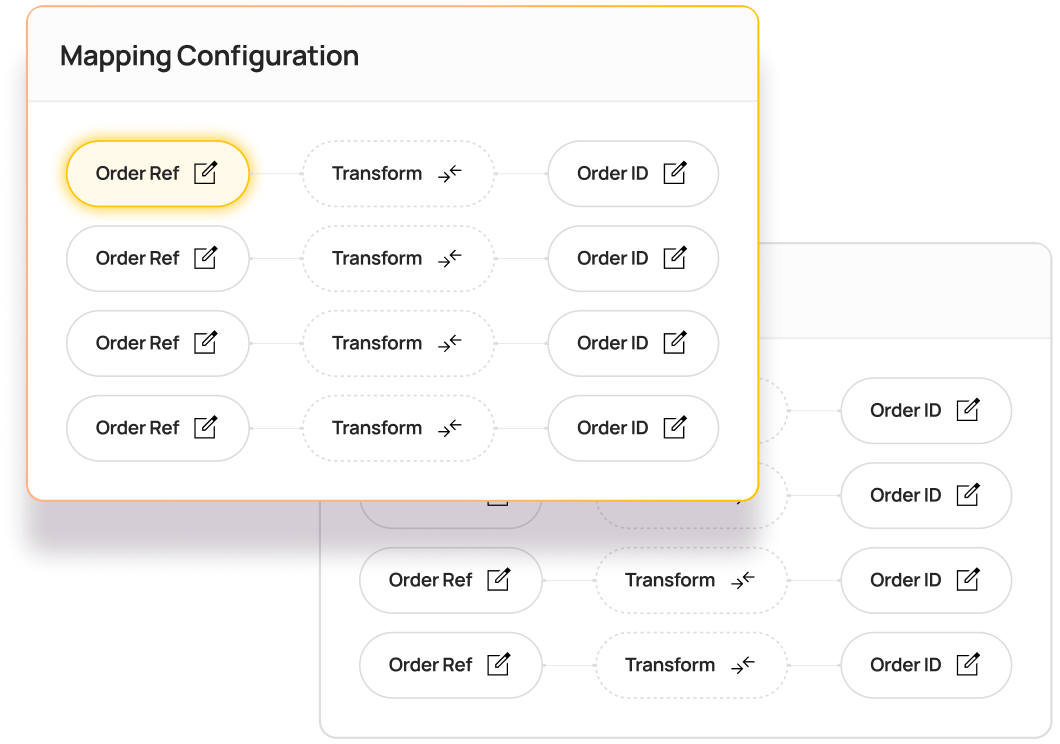
Publish products, variants, rich content and pricing from your PIM, such as Akeneo or Plytix, straight to Shopify. Every store and market shows accurate, complete product information, and merchandising never has to re-key it.

Bring Shopify customers and order history into HubSpot, Salesforce, Klaviyo or Zendesk, so marketing segments by what people buy and service teams see every order without leaving their tools.
Connect Shopify to your WMS or 3PL, including Descartes Peoplevox, GXO, Huboo and ShipBob. Orders reach the warehouse as they’re placed, and tracking flows back to Shopify and your customer. Because the 3PL sits on its own connection, you can switch provider without replatforming. Castore completed a full 3PL migration in eight weeks.
If a system has an API or an MCP server, Patchworks can connect it to Shopify. Describe the integration in a prompt, or upload an API specification or JSON file, and AI Studio’s Implementation Agent builds the connector, process flows and field mappings for you, typically giving you a working model in minutes.


Paired Accelerator
Paired Accelerator
The Shopify & Brightpearl Accelerator is a pre-built integration package that seamlessly synchronises key commerce and operational data between your Shopify ecommerce CMS and Brightpearl by Sage ERP. Built natively on Patchworks’ API-first iPaaS platform, this enterprise-grade accelerator removes the friction of multichannel retail operations.

Paired Accelerator
Paired Accelerator
The Shopify & Virtualstock Accelerator is a pre-built integration package that seamlessly synchronises key commerce, marketplace, and drop-ship data between your Shopify ecommerce CMS and the Virtualstock dropshipping and marketplace network.

Paired Accelerator
Paired Accelerator
The Shopify & Lightspeed Retail EPOS accelerator is a pre-built integration package that seamlessly synchronises key commerce, brick-and-mortar sales, and stock data between your Shopify ecommerce CMS and Lightspeed Retail EPOS point-of-sale system.
| Item |
Details
|
|---|---|
| Orders |
Orders from every Shopify store and POS location are sent to your ERP, OMS or 3PL as they’re placed, with customer, payment and tax details.
|
| Inventory across locations |
Stock levels from your ERP or WMS are published to Shopify by location, so every store, market and channel sells from the same numbers.
|
| Fulfilments and tracking |
Shipments and tracking numbers from your warehouse or 3PL are written back to Shopify, and customers are notified automatically. Partial fulfilments are included.
|
| Refunds and returns |
Shopify refunds and returns are recorded in your ERP and accounting system, so finance and customer service see the same record.
|
| Products and variants |
Products, variants, metafields and pricing are published from your ERP or PIM to Shopify and kept in step.
|
| Customers and B2B companies |
Customer records, B2B companies, locations, catalogues, price lists and payment terms stay aligned between Shopify and your ERP.
|
| Payouts and transactions |
Shopify Payments payouts, fees and transactions are reconciled in your accounting system.
|
Shopify Plus integrations get harder as you grow. Each new store, brand, market or wholesale channel adds another set of orders, stock and customers to keep in step. Patchworks gives you one integration layer for all of them.

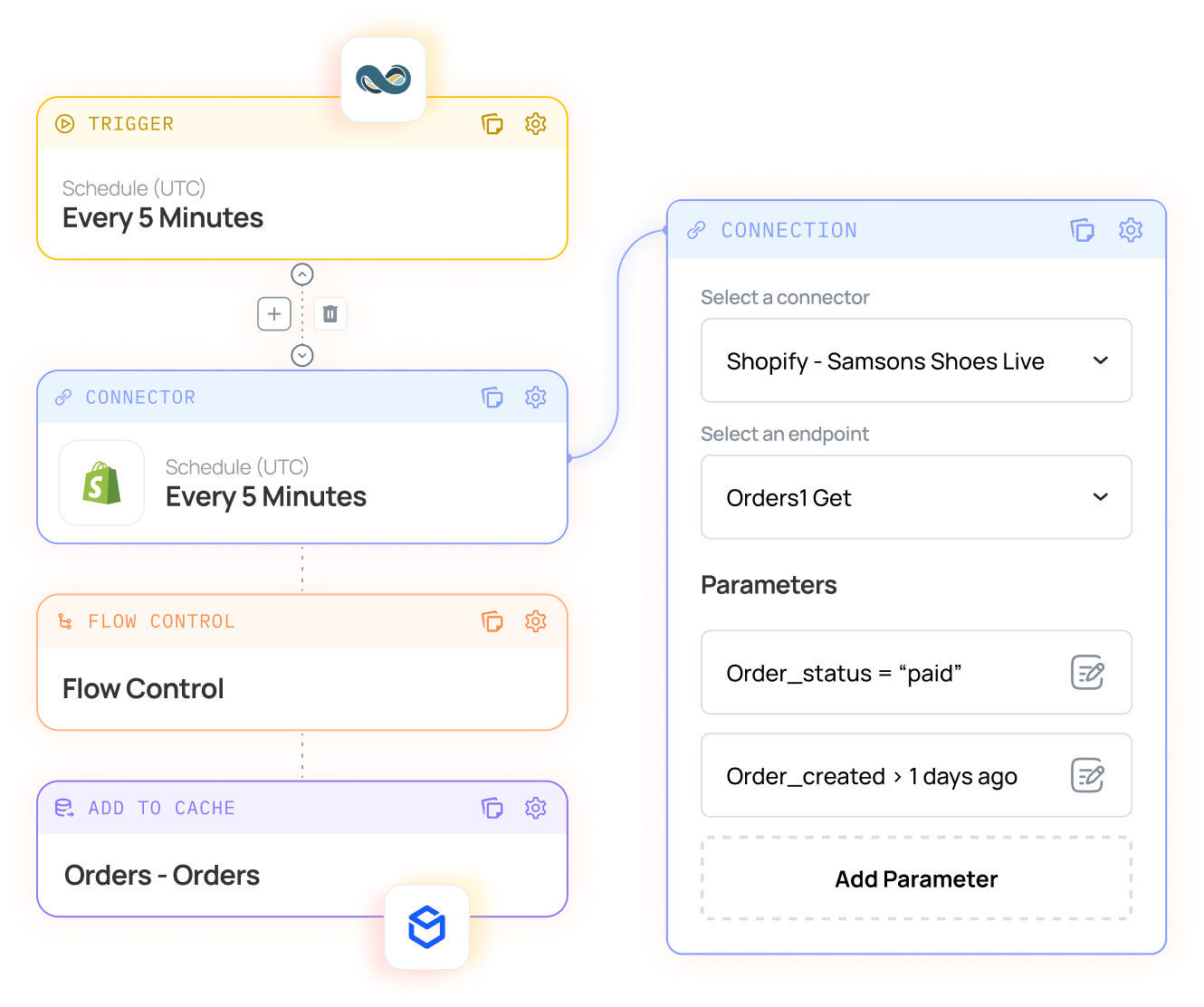
Most Shopify integrations work on launch day. The test comes on Black Friday, when order volumes spike, prices change by the hour and a failed sync means lost sales.

Fashion & Apparel
Leisure & Hobbies
Case Study

Fashion & Apparel
Case Study

Fashion & Apparel
Case Study

Fashion & Apparel
Case Study

Fashion & Apparel
Case Study

Fashion & Apparel
Case Study
Shopify integration connects your Shopify or Shopify Plus store to the other systems your business runs on, so data moves between them automatically. For retailers, that usually means syncing orders, stock, products, customers and fulfilments between Shopify and an ERP, warehouse or 3PL, marketplaces, accounting software and a CRM. See all our ecommerce integrations.
Patchworks is Shopify’s only Certified Technology Partner for integrations. Shopify certifies a small group of technology partners it trusts to deliver reliable, scalable solutions for merchants on complex commerce stacks. Patchworks has also been a Shopify Plus Partner since 2015, and the Patchworks app is available in the Shopify App Store. Read the certification announcement.
For one or two simple connections, a Shopify App Store app is often enough. Brands move to an integration platform such as Patchworks when apps start to multiply: several stores or markets, an ERP and a 3PL that both need the same orders, B2B pricing, or peak volumes where a failed sync costs sales. Shopify Flow automates tasks inside Shopify and works alongside an iPaaS rather than replacing it. Compare iPaaS platforms.
DO use a Shopify app for a single, simple point-to-point connection.
DON’T stack point-to-point apps once Shopify needs to share the same orders, stock and customers with an ERP, a 3PL and marketplaces.
Yes. The Patchworks Shopify connector uses Shopify’s GraphQL Admin API, which Shopify recommends over its older REST API. It includes predefined endpoints for orders, products, customers and more, and you can add custom GraphQL queries for anything else. Install the Patchworks app from the Shopify App Store to create an authenticated connector in one step. See our Shopify connector documentation.
Connect them through an integration platform, so orders flow into your ERP and stock, prices and fulfilments flow back to Shopify. Patchworks has prebuilt accelerators for Shopify NetSuite integration and Brightpearl, and connects Shopify to Business Central, Sage and SAP. For a full walkthrough, read our Shopify ERP integration guide.
Use an integration platform so orders reach your warehouse as soon as they’re placed, and shipment and tracking details come back to Shopify automatically. Patchworks connects Shopify to WMS and 3PL providers including Descartes Peoplevox, GXO, Huboo and ShipBob. Because the 3PL is a separate connection, you can change provider without rebuilding your Shopify integrations. See 3PL and fulfilment orchestration.
Yes. Patchworks connects expansion stores, brands and international markets to the same ERP, warehouse and marketplaces, so every store sells from one stock pool and sends orders to one back office. Bollin Group runs more than 20 Shopify stores on Patchworks, and Castore integrates a new brand website in about four hours.
Yes. Patchworks syncs Shopify B2B companies, locations, catalogues, price lists and payment terms with your ERP, and sends B2B orders back with the details finance needs. Wholesale orders from EDI trading partners can flow into the same stack. Natural Instinct runs both B2B and DTC customers from one Shopify store, integrated with Sage through Patchworks.
Yes. Patchworks connects Shopify to Amazon, eBay and TikTok Shop so marketplace orders flow into the same back office as your Shopify orders, and available stock is published to every channel from one source. That prevents overselling and keeps fulfilment in one place. See our marketplace integrations.
Yes. Patchworks connects Shopify to Xero and QuickBooks so orders, Shopify Payments payouts, fees, VAT and refunds are reconciled in your accounts automatically, rather than through exports or daily summaries.
Yes. Patchworks brings Shopify customers, orders and purchase history into HubSpot or Salesforce, so marketing can segment by what people buy and sales and service teams see every order.
It depends on how many systems you connect and how much data moves between them. Patchworks pricing is based on the number of connectors and monthly operations. An operation is counted each time Patchworks sends or receives a data payload. Every plan includes unlimited users. See pricing.
Most teams connect their first systems and deploy initial flows within days, and more complex Shopify Plus estates typically go live in weeks rather than months. You can implement in-house with support from Patchworks’ senior engineers, or work with one of our approved agency partners, including Shopify Plus agencies such as Swanky.
Yes, as long as it has an API or an MCP server. In AI Studio, describe the integration in a prompt or upload an API specification or JSON file, and the Implementation Agent builds the connector, process flows and field mappings, typically giving you a working model in minutes. You can also build custom connectors without code in Connector Builder.
BOOK DEMO
To ensure you get the best from your personalised demo, we need to gather some information. This helps us match you with an expert who understands your needs.
Partner application
To make the most of your partnership application with Patchworks, we need to collect some details. This allows us to connect you with a representative who can address your specific requirements.

“You should have partnered with Patchworks yesterday. It saves time, cuts costs, and most importantly keeps your customers happy.”
Gentian Shero
Co-Founder & Chief Strategy Officer, Shero Commerce
“You should have partnered with Patchworks yesterday. It saves time, cuts costs, and most importantly keeps your customers happy.”
Gentian Shero
Co-Founder & Chief Strategy Officer, Shero Commerce
Partner match making
Tell us a little about yourself and your company, and we’ll find the perfect expert to help.
Partner match making
Event Title
Complete the form below to reserve your place and be the first to receive event updates & details.
Download resource
Tell us a little about yourself to download this quality resource.