Authentication is simple… until it isn’t
On paper, most APIs look straightforward:
- Add an API key
- Or implement OAuth
- Send requests
Job done.
But in reality, authentication is where integrations quietly become fragile.
Tokens expire. Credentials rotate. APIs evolve. And suddenly, something that “worked fine yesterday” is failing in production—with no obvious reason why.
For most dev and ops teams, the challenge isn’t understanding authentication.
It’s managing it reliably over time, across multiple systems.
What devs actually deal with (but rarely talk about)
If you’ve built integrations before, you’ve likely run into some version of this:
- OAuth tokens expiring mid-process
- Refresh logic failing silently
- API keys duplicated across services
- Different auth methods across every platform
- Debugging failed requests with limited visibility
None of this is complex in isolation.
But across multiple integrations, it becomes repetitive, brittle, and time-consuming to maintain.
The real problem isn’t authentication—it’s repetition
Every new integration tends to reintroduce the same work:
- Rebuilding auth logic
- Re-handling token storage and refresh
- Reapplying headers and credentials
- Re-debugging the same failure patterns
It’s not difficult work.
It’s just work you shouldn’t have to keep doing.
Common API authentication types (quick breakdown)
Before we get into solutions, it’s worth grounding this in the real patterns you’re dealing with.
API keys
The simplest approach:
- Passed via headers or query parameters
- Static credentials
- Easy to implement
Where it breaks:
- Poor rotation practices
- Hardcoded keys across services
- Limited security if mishandled
Basic authentication
Still used in legacy or internal systems:
- Username + password (usually base64 encoded)
Where it breaks:
- Not suitable for modern distributed systems
- Security concerns at scale
OAuth 2.0
The standard for modern SaaS platforms (Shopify, Google, etc.):
- Access tokens + refresh tokens
- Scoped permissions
- Expiry + renewal cycles
Where it gets messy:
- Token refresh logic
- Expiry edge cases
- Handling revoked access
- Syncing token state across systems
Custom authentication
Some APIs don’t follow standards:
- Custom headers
- Signed requests
- Multi-step auth flows
Where it hurts:
- No reusable patterns
- Requires bespoke handling every time
Where custom builds start to break down
Most teams can implement authentication. That’s not the issue.
The problem shows up later:
1. Token lifecycle management
- Refresh fails → requests fail
- Silent expiry → data stops flowing
- Debugging becomes reactive
2. Duplication across integrations
- Same auth logic rewritten multiple times
- Slight variations introduce bugs
- No central control
3. Lack of visibility
- Failed requests without clear cause
- No central logging of auth issues
- Hard to trace root problems
4. Maintenance overhead
- API changes require refactoring
- Credential updates ripple across systems
- Dev time gets pulled into upkeep
A more sustainable approach to authentication
Instead of rebuilding authentication logic for every integration, a better approach is:
- Define authentication once
- Reuse it across endpoints and flows
- Centralise how it’s managed and monitored
This is how Patchworks handles it.
How authentication works in Patchworks
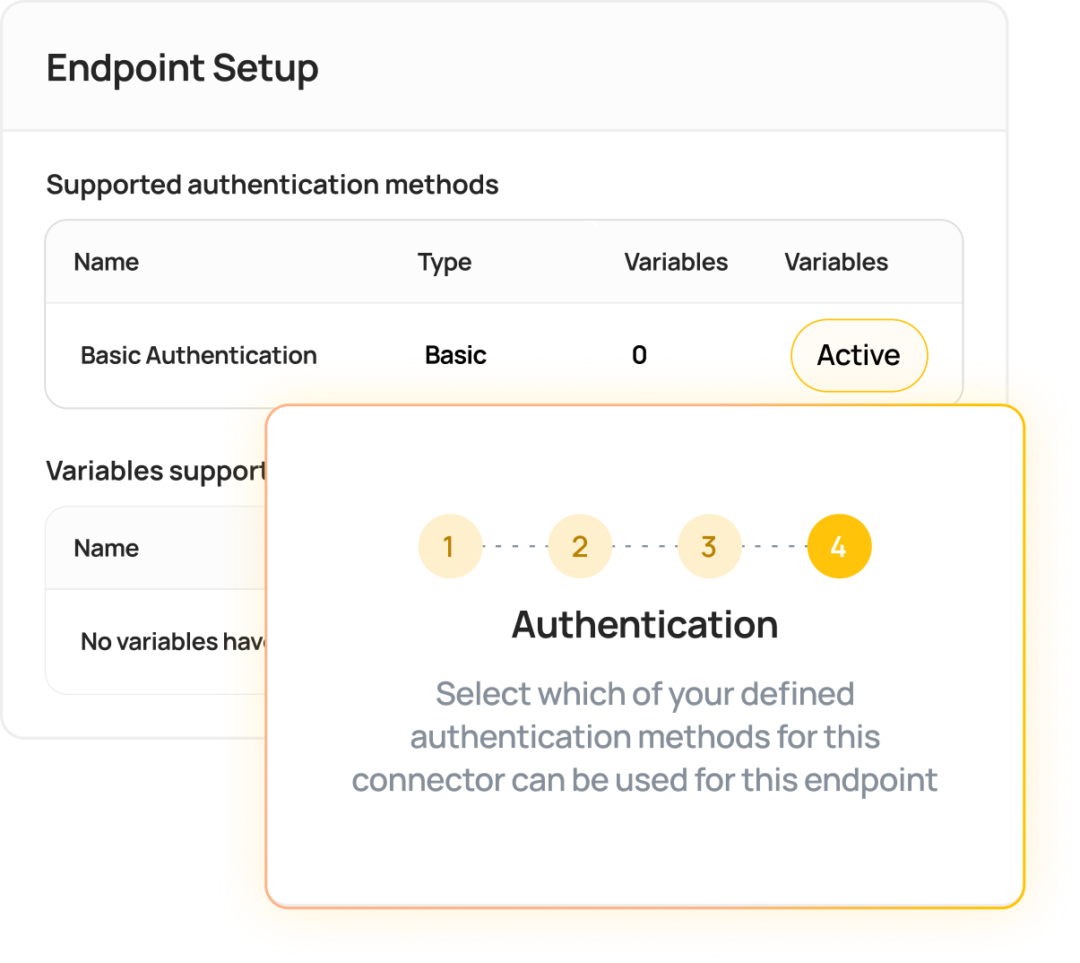
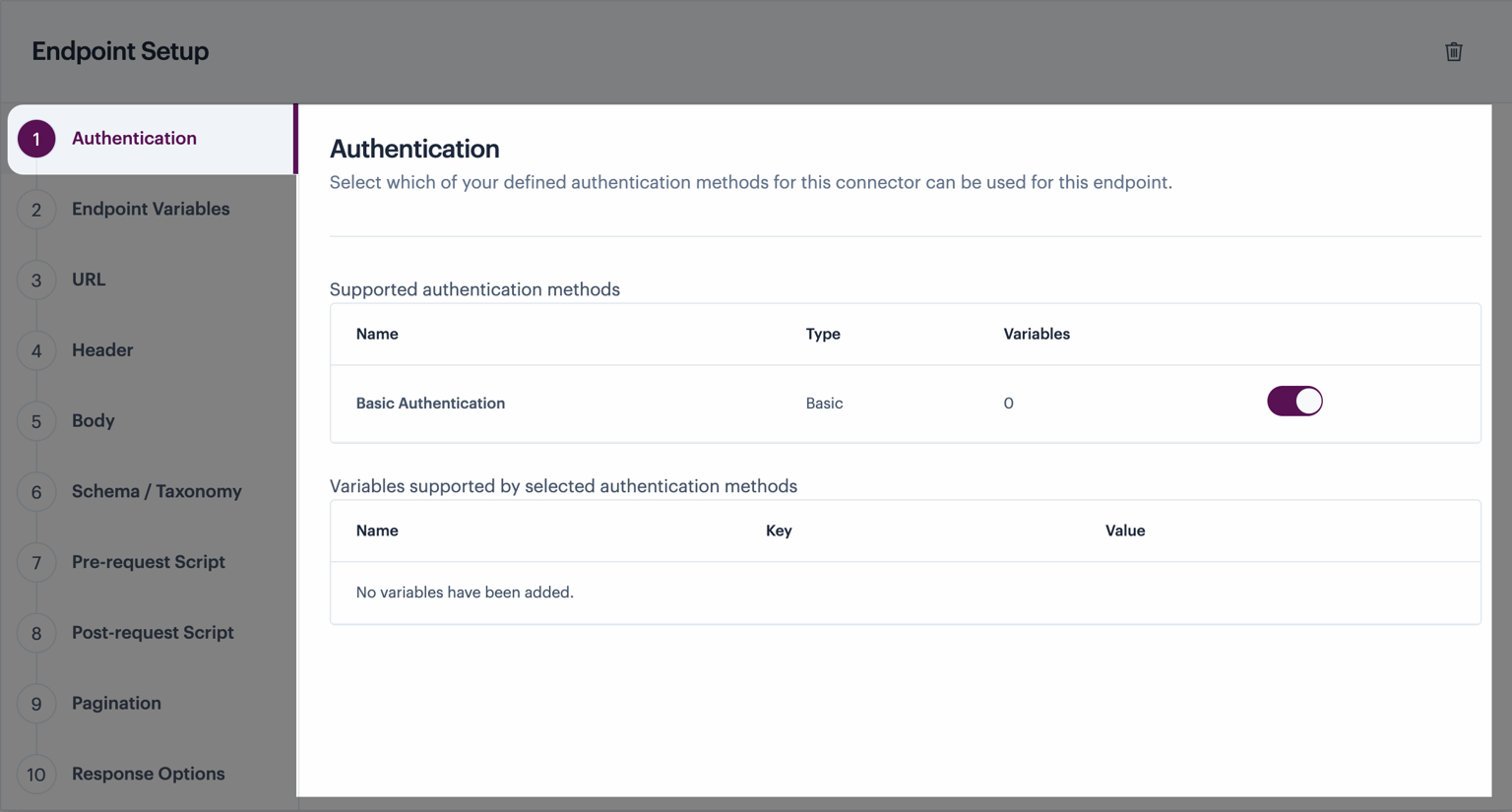
In Patchworks, authentication is configured at the connector level.
That means:
Define once
- Choose auth type (API key, OAuth, etc.)
- Set credentials and headers
- Configure token handling
Reuse everywhere
- Endpoints inherit authentication automatically
- No need to reapply logic per request
- Consistent behaviour across flows
Handle complexity centrally
Patchworks manages:
- Token refresh cycles
- Header injection
- Credential storage
- Secure handling of auth data
You still control how authentication works.
You just don’t have to rebuild it every time.
Example: handling OAuth without the usual friction
Let’s take a common scenario: integrating with a platform like Shopify.
Typical custom build approach
- Implement OAuth flow
- Store access + refresh tokens
- Handle expiry logic
- Retry failed requests
- Debug edge cases
- Reuse everywhere
Works fine—until:
- Tokens expire mid-sync
- Refresh fails silently
- Orders stop syncing
- Someone has to investigate
With Patchworks
- OAuth configured once in the connector
- Tokens managed centrally
- Refresh handled automatically
- Flows continue without interruption
The difference isn’t capability.
It’s removing the operational overhead around it.
Workflow win: one auth setup, multiple integrations
A simple but powerful shift:
- Set up authentication once → reuse across 10+ endpoints and flows
That means:
- No duplication
- No inconsistencies
- Faster implementation
- Fewer failure points
For dev and ops teams, that translates to:
- Less maintenance work
- More predictable integrations
- Faster debugging when issues do occur
This isn’t about removing control
It’s worth being clear here.
Patchworks doesn’t remove the need for developers.
It removes the need to repeatedly solve the same problems.
You still:
- Define how authentication works
- Handle edge cases where needed
- Extend with custom logic when required
But you’re not:
- Rewriting token logic for every integration
- Managing credential chaos across systems
- Debugging the same auth issues over and over
Final thought: authentication should be boring
Authentication isn’t where your team creates value.
It’s necessary. It’s important.
But it shouldn’t be:
- Fragile
- Time-consuming
- Repeated across every integration
Handled properly, it becomes:
- A solved problem that quietly works in the background.
And that’s exactly where it should be.
Want to see how it works in practice?
👉 Watch a demo: https://www.wearepatchworks.com/pages/watch-a-demo
👉 Explore the docs: https://doc.wearepatchworks.com/
👉 Talk to the team: https://wearepatchworks.com/contact/