
Executive Summary
Client: Mellcrest
Sector: B2B Hospitality, Hotel, and Leisure Supplies
Digital Transformation Partner: Real Agency
E-Commerce Ecosystem: Shopify (B2B), Patchworks iPaaS, GenetiQ (Intact iQ)
Key Performance Indicators (KPIs):
- 100% Automated B2B Order Flow: Replaced manual interventions with zero-touch, real-time data integration.
- Eliminated Legacy Risk: Mitigated tech debt and single-point-of-failure vulnerabilities from undocumented custom code.
- Reduced Total Cost of Ownership (TCO): Removed high upkeep fees and emergency patch costs associated with aging middleware.
- Agile Time-to-Market: Rapid deployment of an enterprise-grade integration tier with zero downtime to active trading.
Introduction: Building a high-growth commerce stack for B2B
In the competitive B2B hospitality and leisure supply sector, operational efficiency and data precision are paramount. Enterprise buyers expect seamless experiences, accurate trade pricing, and transparent stock visibility. For brands like Mellcrest, satisfying these demands requires a sophisticated digital backbone capable of syncing complex B2B customer profiles, bulk ordering mechanics, and backend back-office workflows without operational friction.
Faced with a rigid, aging Magento architecture and increasingly expensive third-party maintenance, Mellcrest reached a pivotal growth ceiling. To reclaim full operational control, the brand initiated a comprehensive digital transformation in collaboration with commerce implementation specialists Real Agency and the integration experts at Patchworks. By dismantling their legacy tech debt and replacing opaque custom connections with an agile, visible Integration Platform as a Service (iPaaS), Mellcrest has established a scalable, fully automated operational ecosystem designed for long-term growth.
The Challenge: Overcoming Legacy Friction and Opaque “Black Box” Tech Debt
Prior to their modern ecosystem update, Mellcrest’s digital commerce operations relied on an older, highly customised Magento storefront. This was connected to their core backend ERP system via ad-hoc, undocumented middleware scripts. Over years of operational shifts, this architecture degraded into an unstable “black box.”
Mellcrest faced three major operational roadblocks that threatened to halt its enterprise scaling:
1. The Single Point of Failure (The Knowledge Trap)
The bespoke, custom integration code running Mellcrest’s core operations had been authored by developers who were no longer involved with the business. Without clear documentation or automated logging, the internal IT team and external partners found themselves in a high-risk situation whenever an error occurred. Manual debugging became a drain on time, drawing valuable resources away from commercial optimisation.
2. Runaway Upkeep Costs and TCO
As the legacy e-commerce platform grew outdated, keeping it stable became increasingly resource-intensive. Basic security updates, patch management, and mandatory api adjustments required expensive, specialised developer hours. Mellcrest found themselves paying high maintenance premiums merely to keep baseline systems functional, rather than investing in new features.
3. B2B Scaling Friction
B2B commerce involves distinct complexities: custom customer price lists, tiered volume discounts, and rigid corporate account structures. The legacy system was too brittle to scale these variables effectively. Manual administrative tasks began to build up within the back office as staff manually verified order criteria, which restricted Mellcrest’s ability to onboard new accounts efficiently.
“Migrating from our legacy Magento architecture to Shopify using Patchworks has completely modernised our B2B ecosystem. Patchworks acts as a secure intermediary layer, mapping our complex tier-pricing and company account rules seamlessly between Shopify and our back-end ERP. We have successfully eliminated the risk of undocumented custom code, lowered our total cost of ownership, and automated our entire order-to-fulfilment cycle.“
The Mellcrest Digital team
The Solution: A Seamless Migration to Shopify via Patchworks iPaaS
To mitigate risk and ensure uninterrupted trading, Real Agency and Patchworks implemented a phased, zero-downtime migration strategy. Instead of a high-risk “big bang” switchover, the project systematically replaced the aging middleware infrastructure with a standardised, visible integration layer before launching the new storefront.
Stabilising the Backend Data Flow
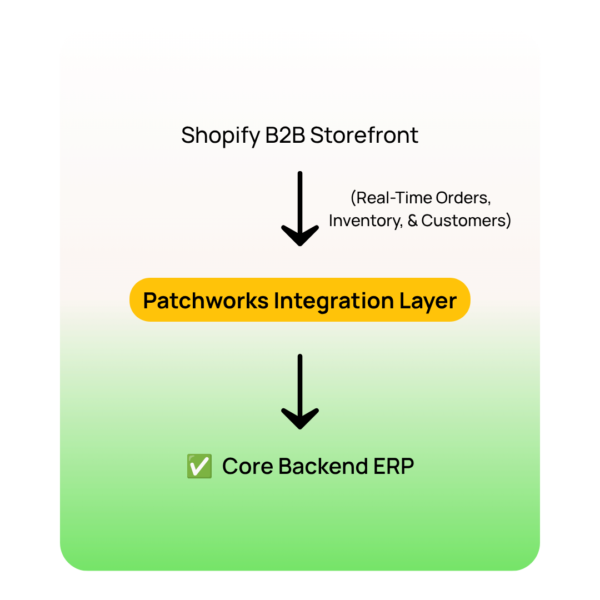
Real Agency utilised their deep experience in enterprise commerce architectures to map out Mellcrest’s complex B2B data points. Patchworks then deployed its cloud-native iPaaS to serve as the secure intermediary layer, mapping customer accounts, trade pricing levels, and SKU catalogs directly from the ERP.
Launching the Modern Shopify Storefront
With the integration backbone fully tested and active, Mellcrest migrated its direct customer and business-to-business operations onto Shopify. Patchworks configured automated data flows to keep the storefront and ERP perfectly aligned:
- Automated Order Processing: Orders placed on Shopify flow into the ERP instantly, accelerating fulfilment cycles.
- Inventory Synchronisation: Global stock levels update automatically across systems, preventing overselling on high-volume items.
- B2B Customer Mapping: Complex tier-pricing matrices and company terms are accurately maintained across the ecosystem.
Enterprise-Grade Operational Support
To safeguard ongoing operations, Mellcrest’s infrastructure is protected by Patchworks’ enterprise-level support framework. With live transaction monitoring, error alerting, and automated retries, Mellcrest has an extended technical backstop, allowing their internal teams to focus on customer acquisition rather than system maintenance.
The Results: True Operational Visibility and Frictionless Scale
Transitioning from a fragile, custom-coded middle tier to a standardised, enterprise-grade iPaaS has completely transformed Mellcrest’s relationship with its business data.
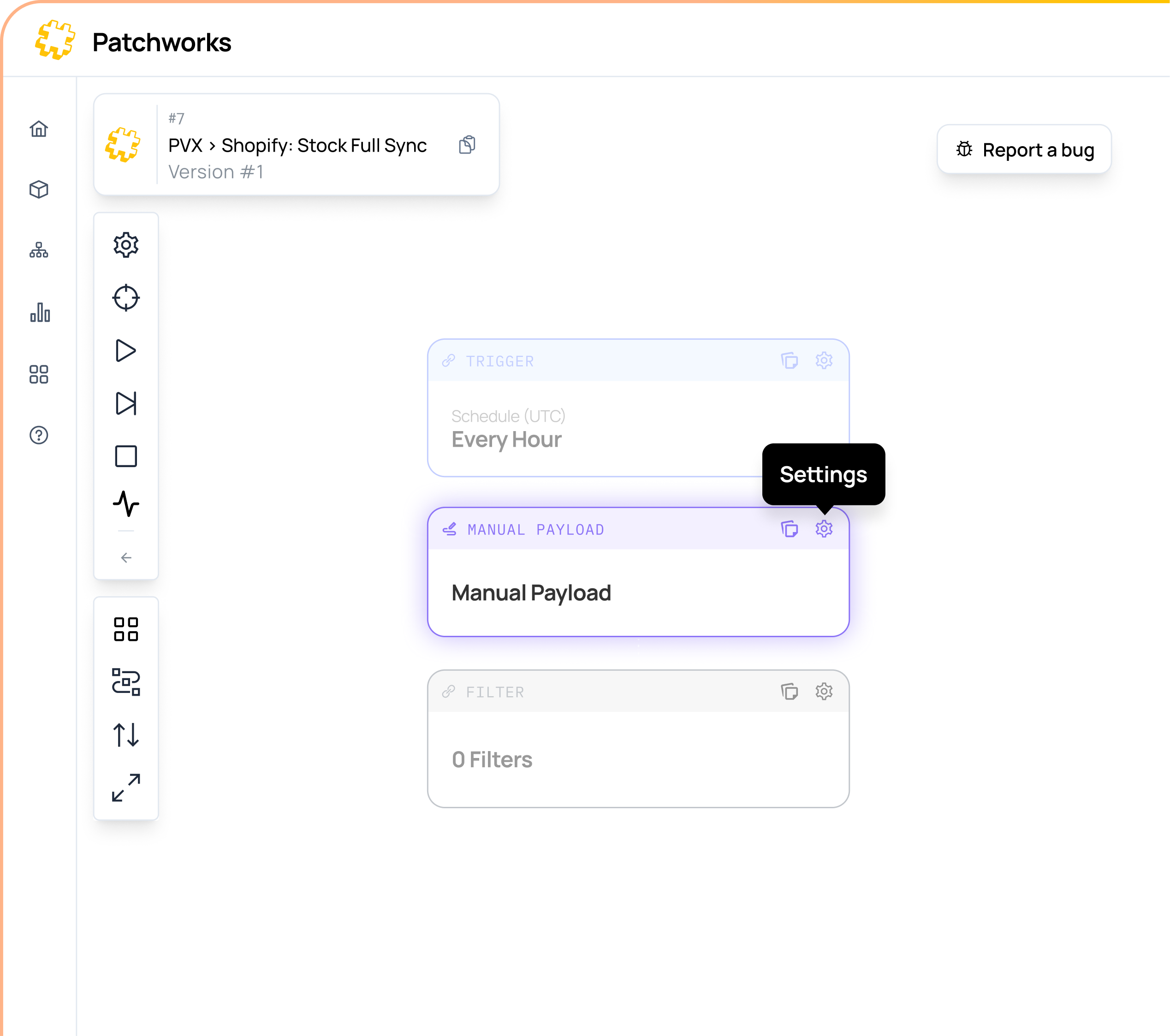
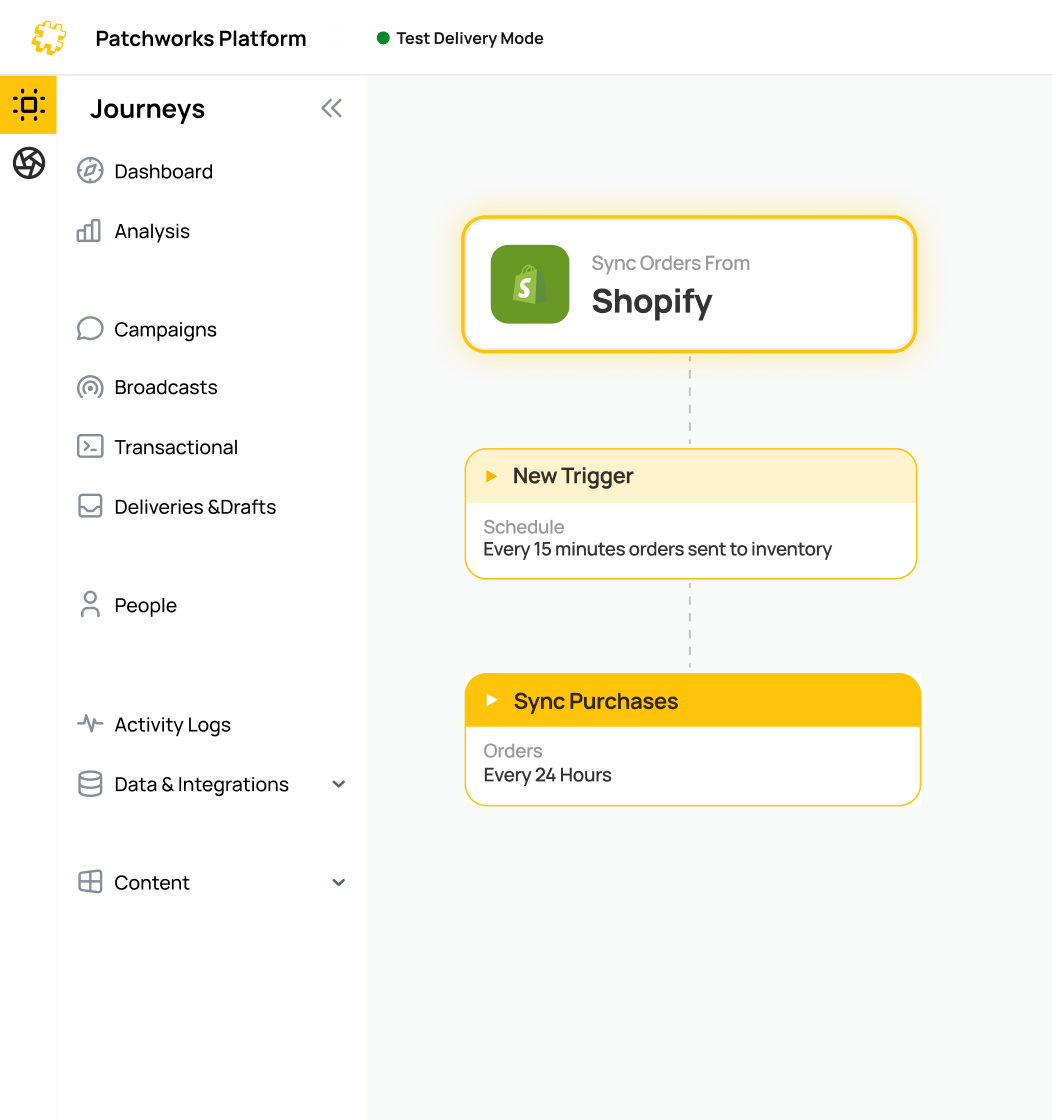
- Complete Visibility and Self-Service Control: Moving away from a custom “black box” has given Mellcrest full visibility into its operations. Using the intuitive Patchworks visual interface, administrators can trace data paths, run system health audits, and adjust data mappings without needing specialised developer resources.
- Substantial Cost and Resource Efficiencies: By automating their order processing and data flows through Patchworks, Mellcrest eliminated unpredictable legacy developer fees. The back-office team has been freed from hours of manual order reconciliation, shifting their focus toward strategic growth.
- A Scalable Foundation for Future Channels: With a modern Shopify storefront and a decoupled integration layer, Mellcrest is no longer constrained by rigid technical structures. New sales channels, logistics providers, or digital applications can be added to the Patchworks dashboard without disrupting core systems.
“B2B commerce demands absolute architectural reliability. When you are managing custom trade contracts, high-volume orders, and specific inventory matrices, you cannot afford to have data trapped in an unmonitored custom script. By deploying Patchworks, we replaced Mellcrest’s legacy tech debt with a decoupled, transparent integration layer. The result is an infrastructure that isn’t just stable today—it is fully prepared to adapt to whatever channel Mellcrest chooses to explore next.”
Conor Barr
CTO, Patchworks
Strategic Takeaways
- Eliminate “Black Box” Dependencies Early Custom-coded, undocumented integrations are a significant risk for growing enterprise brands. Transitioning to a standardised, cloud-native iPaaS layer ensures that your core data flows remain fully visible, secure, and independent of any single developer’s tribal knowledge.
- Prioritise Architecture Decoupling Do not tie your backend systems directly to your front-end storefront with rigid, bespoke code. By implementing a decoupled integration layer, you can upgrade, modify, or replace your commerce platforms (such as migrating from Magento to Shopify) without risking your core business logic.
- Automate for Operational Excellence B2B scaling relies heavily on efficiency. Automating your order-to-fulfillment cycle and customer account syncing removes the administrative bottlenecks that slow down your team, allowing your business to onboard new customers and process higher order volumes smoothly.
Ready to Unshackle Your E-Commerce Strategy from Legacy Tech Debt?
Don’t let opaque custom code and rigid backend systems dictate your brand’s growth potential. Contact our enterprise integration experts today to discover how Patchworks can streamline your data flows, lower your operational costs, and accelerate your multi-market expansion.
Explore how a retail-first iPaaS can remove bottlenecks from your commerce stack.
🔎 See Patchworks in action: Watch a guided video tour
🚀 Get the conversation started: Speak to a Patchworks iPaaS expert
📚Get to know the platform: Read Patchworks’ product docs