
Executive Summary
Client: BGRP Holdings (Bazaar Group)
Sector: High-Volume Furniture and Home Decor Omnichannel Retailer
Digital Transformation Partner: Cogent2
E-Commerce Ecosystem: Shopify, Khaos ERP, Mirakl API, B&Q, Debenhams, La Redoute, Otto, The Range, Wayfair
Key Results:
- 13+ Active Enterprise Marketplace Channels
- 5-Week Phase 1 ERP Optimisation Turnaround
- 6-Week Agile Shopify Storefront Migration
- £1,000’s Legacy Upfront Vendor Maintenance Fees Eliminated
Introduction: Unlocking Scalable Marketplace Automation
In the high-volume furniture and home decor sector, scaling up an international, multi-market footprint demands absolute data agility. For enterprise firms like BGRP Holdings (Bazaar Group) and their brands—including icon and Eden Learning Spaces)—capturing market share across fractured regional channels requires a seamless digital backbone where cross-border inventory updates, high-volume consumer orders, and localised pricing matrices align flawlessly across every single digital touchpoint.
Faced with rigid legacy systems, expensive third-party upkeep, and increasingly opaque integration pathways, BGRP Holdings recognised that sustaining long-term cross-border growth required moving away from ad-hoc, custom-coded middle-tier integrations. To achieve total operational clarity, the group entered into a strategic partnership with the digital commerce implementation specialists at Cogent2 and the enterprise team at Patchworks. Together, they set out to dismantle the brand’s legacy tech debt, automate its high-volume operations, and establish a fully visible, highly transparent, and easily maintainable cloud systems architecture.
The Challenge: Navigating “Voodoo Systems,” Runaway Upkeep Costs, and the Tribal Knowledge Trap
Before upgrading their integration tier, BGRP Holdings’s architecture relied on custom-built legacy setups, ad-hoc extensions, and a fragile bridge connecting a Magento storefront to Rithum (formerly Channel Advisor). Over time, this architecture devolved into a highly complex, undocumented “black box”. Data synchronisation occurred through what internal stakeholders dubbed a “voodoo system,” leaving the executive team with minimal centralised visibility and fragmented control over active inventory.
BGRP Holdings faced three distinct operational roadblocks to enterprise scaling:
- The Tribal Knowledge Vulnerability
The original developers who authored the bespoke, custom integration code had departed the business. As Phil Bagnall, Project Manager at Cogent2, notes: “The legacy system they had inherited had been deprecated or the knowledge just wasn’t there.” Without precise documentation, the remaining internal IT team spent critical resources attempting to manually debug errors and track data points through legacy code. - Exponentially Escalating Total Cost of Ownership (TCO)
Maintaining old custom code via legacy middleware networks created an unpredictable cost environment. When basic updates were required to maintain stable marketplace data flows, legacy providers proposed upfront modification costs climbing to tens-of-thousands of pounds. - Operational Paralysis and Restricted Agility
Because data mapping could only reliably process basic functions between static, rigid endpoints, manual administrative tasks began piling up. The lack of a unified integration layer severely restricted BGRP Holdings’s ability to quickly launch new sales channels or adjust pricing strategies dynamically to meet localised European demand.
“We chose Patchworks to gain true operational visibility and eliminate the tribal knowledge traps of our old custom code. Patchworks and Cogent2 seamlessly connected our core Khaos ERP, our new Shopify storefront, and over 13 international marketplaces via a single infrastructure layer. Moving to a standardised platform has saved us thousands in legacy vendor fees, automated hours of manual admin, and finally given our internal team an intuitive product they can manage themselves.”
BGRP Holdings Digital Team
The Solution: A Phased Systems Architecture Refresh Built on Technical Domain Expertise
To mitigate risk and avoid business disruption, BGRP Holdings, Cogent2, and Patchworks avoided a risky “big bang” implementation. Instead, they executed an agile, multi-phase systems modernisation plan designed to systematically replace the legacy middle-tier software while maintaining uninterrupted operational uptime.
The technical execution succeeded by capitalising on the Cogent2 team’s deep domain knowledge of BGRP Holdings’s core ERP system, allowing the team to accurately map backend data points to modern commerce architecture.
Phase 1: Core ERP Stabilisation (5 Weeks)
The project team rapidly deployed a direct Magento to Khaos ERP connector, eliminating unstable plug-ins and establishing a reliable, automated data flow for core processing within five weeks.
Phase 2 and 3: Omnichannel Marketplace Orchestration via Mirakl API
Patchworks deployed a flexible, centralised Mirakl API connector to seamlessly support BGRP Holdings’s multi-channel expansion. This single infrastructure layer successfully automated order processing, catalog injection, and real-time inventory updates across more than 13 major international marketplaces, including Wayfair, The Range, B&Q, Debenhams, Otto, and La Redoute.
Phase 4: Agile Storefront Modernisation (6 Weeks)
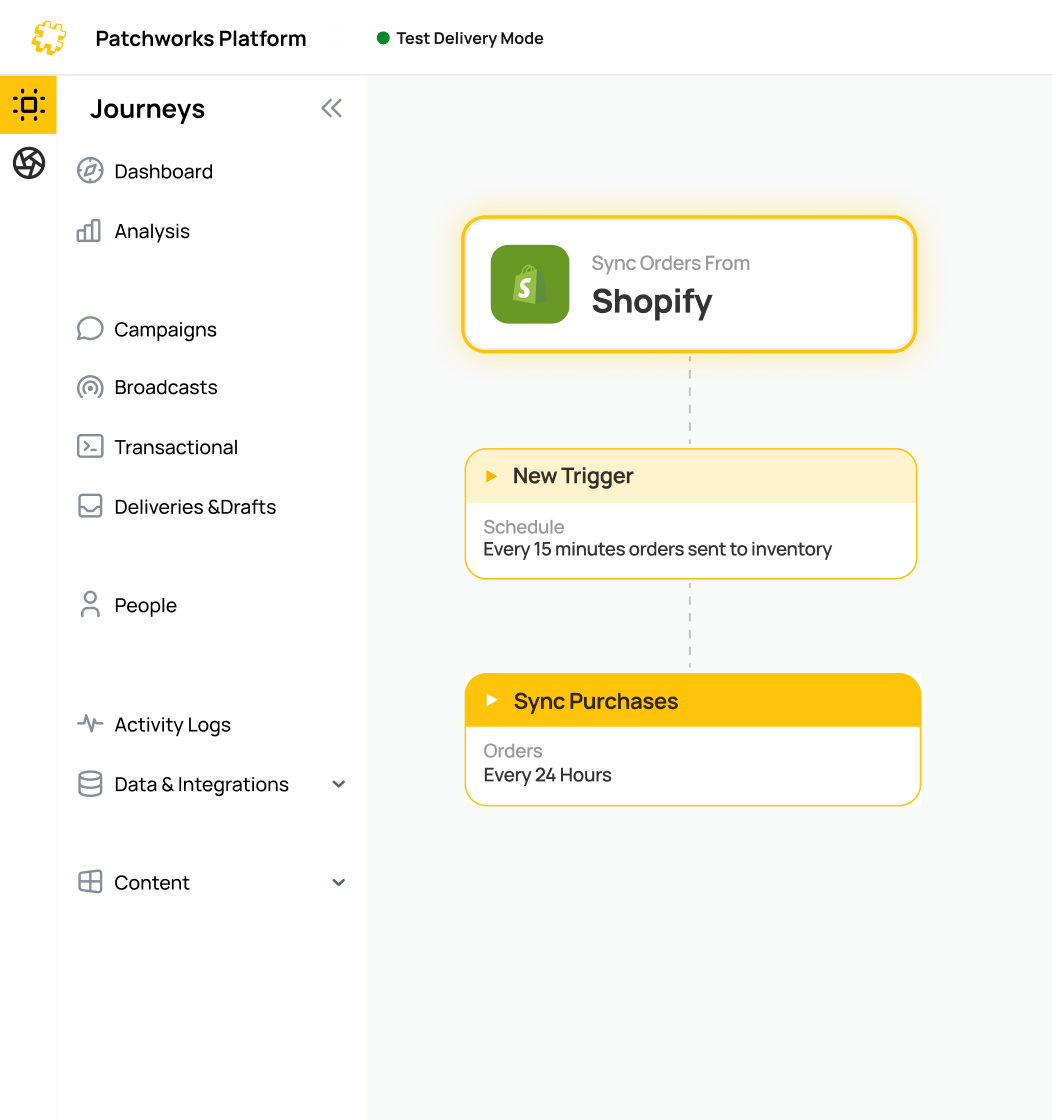
With their backend marketplace ecosystem completely stabilised, the group migrated its main direct-to-consumer (D2C) storefront from legacy Magento to Shopify. Patchworks configured a direct, automated Shopify-to-Khaos ERP flow. This six-week deployment ensured that global inventory pools, pricing tiers, and consumer order statuses synchronised instantly.
Enterprise Support Contract as a Technical Safety Net
To safeguard operations during peak retail seasons, BGRP Holdings established an ongoing Patchworks support contract. Under this framework, Patchworks acts as an extended technical backstop—providing live system health monitoring and executing rapid change requests, such as high-volume automated pricing updates, so the internal team can focus entirely on commercial growth.
The Results: True Self-Service Autonomy and Unrestricted Cross-Border Scale
Replacing fragile middleware with a standardised, enterprise-grade iPaaS completely transformed how BGRP Holdings interacts with its business data, shifting their focus from firefighting tech debt to pursuing strategic expansion.
The enterprise-wide benefits achieved include:
Complete Self-Service Independence
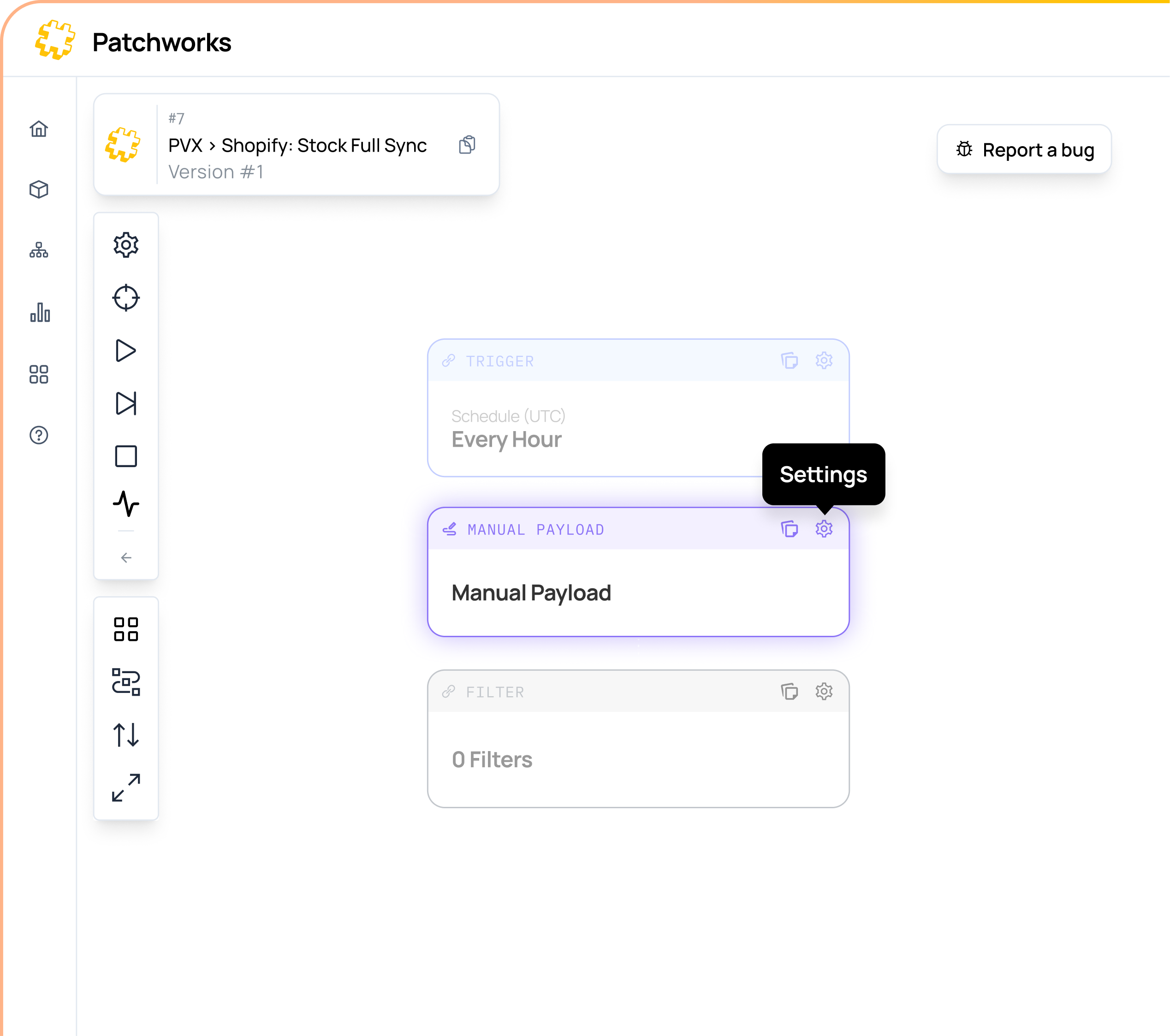
Moving to a documented, industry-standard product enabled BGRP Holdings to hire internal technical staff to oversee system performance. Backed by the intuitive visual interface of Patchworks data flows, they can now monitor system health, run audits, and optimise processes independently. As Dean Baker, Consultant at Cogent2, highlights: “The win on these is that they’ve actually got a product that they can use… [they are] able to actually go in there and look at the flows and things like that… instead of attempting to debug unknown custom code.”
Significant Operational and Cost Efficiencies
By routing all automated channels through Patchworks, BGRP Holdings avoided tens of thousands of pounds in prospective legacy vendor maintenance fees. Simultaneously, the removal of legacy restrictions successfully automated hours of previously manual administrative tasks.
Unrestricted Scalability for Social Commerce
With their core European marketplace matrix and Shopify storefront architecture fully optimised, BGRP Holdings has eliminated the structural constraints that previously capped their growth. The team is now actively preparing to integrate emerging channels, including TikTok Shop and other European localised platforms.
Strategic Takeaways
For growing omnichannel brands evaluating a legacy integration refresh, the Cogent2 and Patchworks delivery teams highlight three critical takeaways:
- Address the Human Element and Build Trust Early
Systems architecture transformations are as much about change management as they are about software. Moving away from a familiar legacy provider requires establishing deep operational trust via a phased, highly transparent delivery roadmap. - Prioritise Standardised Visibility Over Bespoke Code
Custom-coded, undocumented scripts represent a ticking operational clock for enterprise organisations. Transitioning to a standardised iPaaS layer guarantees that your entire digital commerce infrastructure remains visible, manageable, and fully audit-proof. - Build a Flexible Tech Stack Ready for Fast-Evolving Channels
Modern e-commerce channels evolve on a six-month cycle, not a five-year cycle. Brands must remain agile and footloose. Rather than binding your operations to rigid, monolithic backend constraints, deploy a decoupled integration layer that allows you to connect, disconnect, and experiment with new sales channels in real time.
Ready to Unshackle Your Omnichannel Strategy from Legacy Tech Debt?
Don’t let opaque custom code and rigid backend systems dictate your brand’s growth potential. Contact our enterprise integration experts today to discover how Patchworks can streamline your data flows, lower your operational costs, and accelerate your multi-market expansion.
Explore how a retail-first iPaaS can remove bottlenecks from your commerce stack.
🔎 See Patchworks in action: Watch a guided video tour
🚀 Get the conversation started: Speak to a Patchworks iPaaS expert
📚Get to know the platform: Read Patchworks’ product docs