









Ecommerce
Shopify
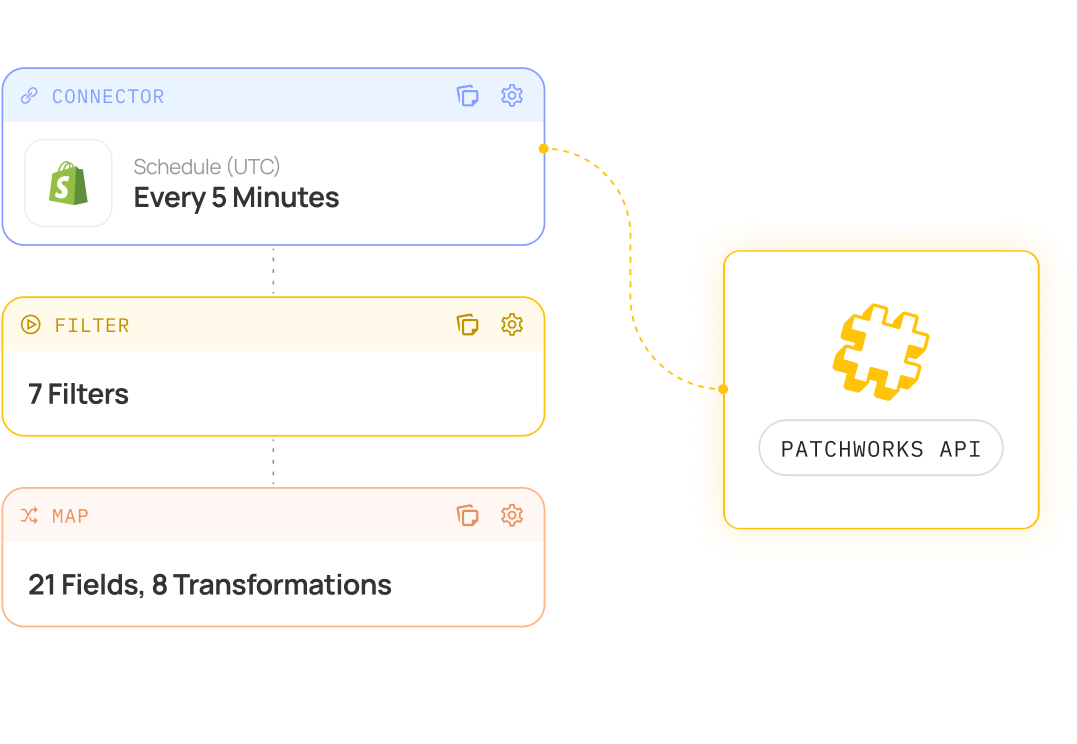
Connect Shopify and Shopify Plus to your ERP, 3PL, marketplaces and CRM with Patchworks, Shopify’s only certified technology partner for integrations.
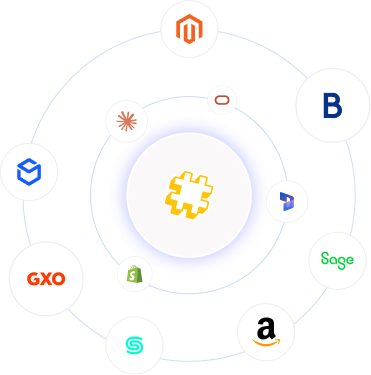
Patchworks connects Sage 50 Accounts to your website, marketplaces and CRM, so orders, customers, stock and payments move automatically between Sage 50 and every channel, without CSV imports or re-keying. One integration layer for every channel, on an integration platform (iPaaS) trusted by 1,700+ brands.
Sage 50 runs on your desktop or server, not in the cloud, so we connect to it securely where your data lives.
Supporting complex retail operations across fast-growing brands


| Item |
|
|---|---|
| Sage product |
Sage 50 Accounts (UK), including Sage 50cloud. The US and Canadian editions of Sage 50 are separate products
|
| How Sage 50 is accessed |
Sage 50 has no cloud API. Patchworks reads Sage 50 data through its ODBC driver, and writes orders, customers and payments using Sage’s developer SDK, over a secure connection to the machine or server where your Sage 50 data lives
|
| Connector |
Built for your setup using AI Studio, Connector Builder or the MCP Server
|
| Sage 50 records |
Customers, sales orders, sales invoices, receipts, credit notes, products and stock levels, nominal codes and VAT tax codes
|
| Connects Sage 50 to |
Any system with an API or MCP server
|
| Triggers |
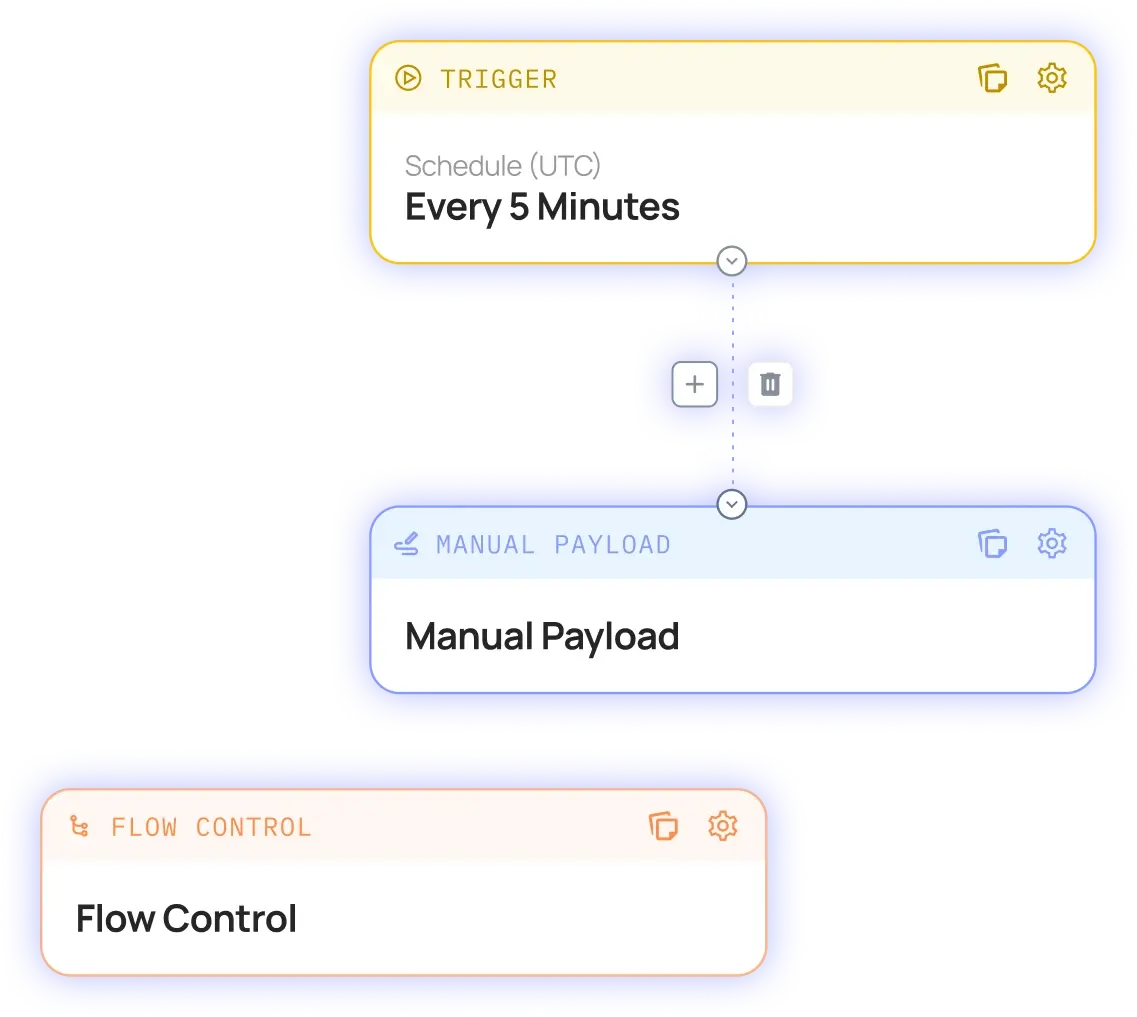
Scheduled and event-driven process flows
|
| Security |
SOC 2 and ISO 27001
|
| Pricing |
Based on connected systems and monthly operations, with unlimited users
|
Sage 50 is harder to integrate than cloud software, which is why so many Sage 50 users are still importing CSV files. Here’s how Patchworks gets data in and out of it.
Connect Sage 50 to your website and stop re-keying orders. WooCommerce, Shopify, Adobe Commerce (Magento) and BigCommerce orders arrive in Sage 50 as sales orders or invoices, with the customer and VAT attached, and stock levels and prices flow back to your store.
Bring Amazon, eBay and TikTok Shop orders into Sage 50 alongside your web orders, with marketplace fees posted to the nominal codes you choose. Stock is published from Sage 50 to every marketplace, so you don’t oversell.
Send orders to Descartes Peoplevox, GXO, Huboo or ShipBob, and bring despatches and stock movements back, so Sage 50 reflects what has actually left the warehouse.
EDI
Wholesale orders from EDI trading partners arrive in Sage 50 alongside your web orders, and trade customers keep their pricing and terms.
Connect Sage 50 to HubSpot or Salesforce, so sales and account teams can see customer balances, invoices and payment status without asking finance. New customers flow into Sage 50 with the right account details.
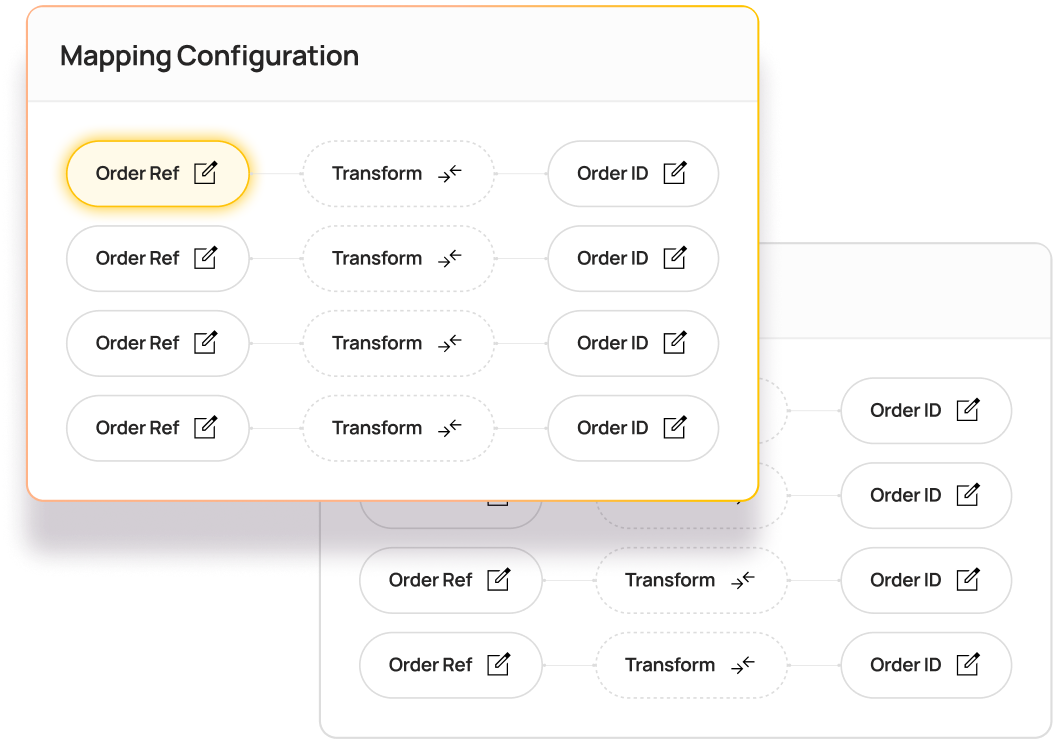
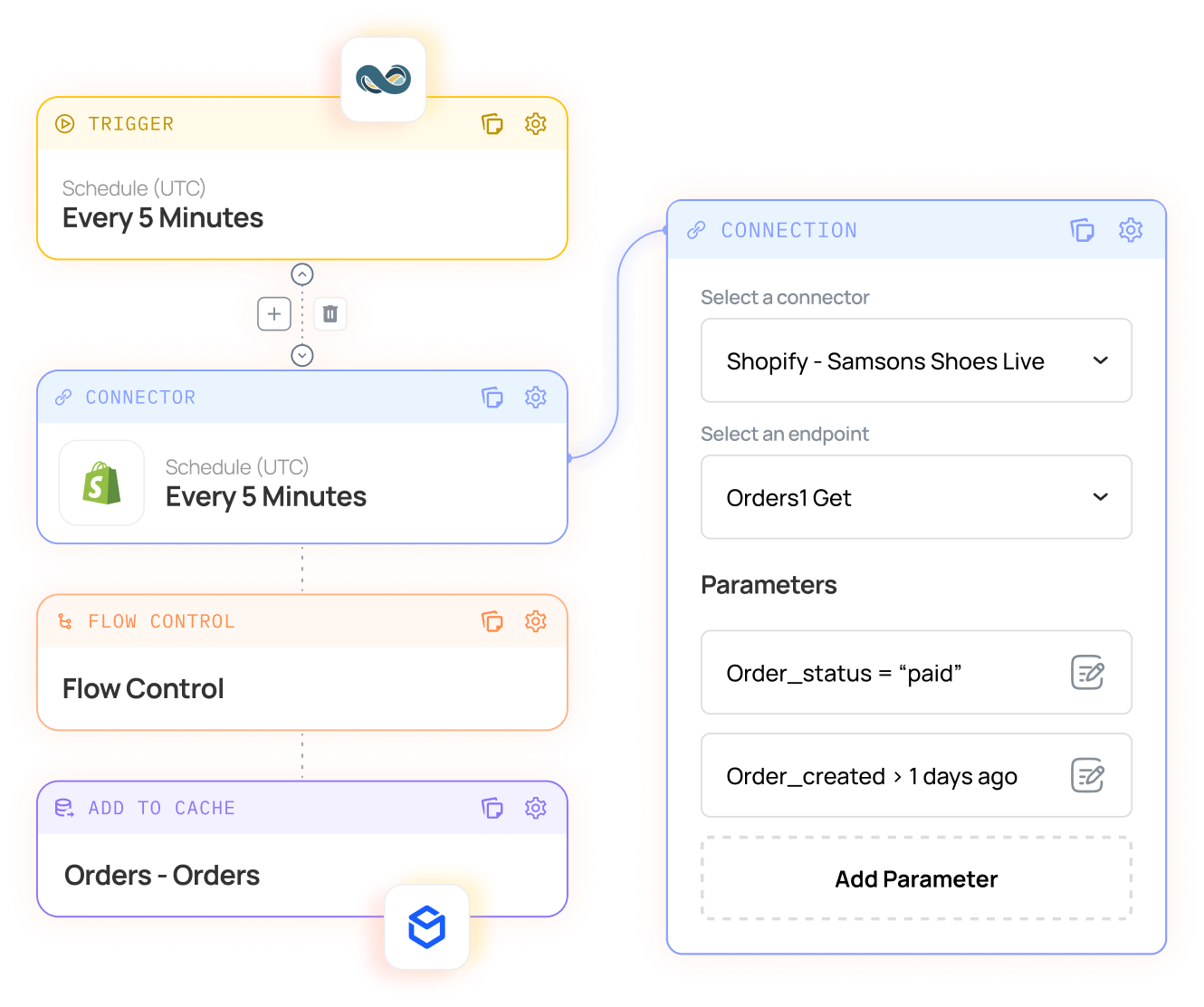
Selling somewhere we don’t have a prebuilt connector for? Describe the integration in a prompt, or upload an API specification or JSON file, and AI Studio’s Implementation Agent builds the connector, process flows and field mappings for you, typically giving you a working model in minutes.
| Item |
Details
|
|---|---|
| Orders |
Website and marketplace orders are created in Sage 50 as sales orders (in Sage 50 Accounts Professional) or sales invoices, with customer, pricing and VAT.
|
| Customers |
Online customers are matched to existing Sage 50 customer accounts, or new accounts are created, so trade customers keep their terms and nothing is duplicated.
|
| Stock and products |
Product records and stock levels are read from Sage 50 and published to your website and marketplaces, so every channel sells what you actually have.
|
| Payments and receipts |
Payments are recorded against the right invoices in Sage 50, with gateway and marketplace fees posted to the nominal codes you choose.
|
| VAT tax codes |
Each sale is posted with the right Sage 50 tax code, for example T1 for standard rate, T5 for reduced rate or T0 for zero-rated, so your VAT return reflects every channel.
|
| Refunds and credit notes |
Refunds and returns become credit notes against the original invoice, so customer balances and your VAT stay correct.
|
Planning a move to Sage Accounting, Sage 200 or Sage 50 Cloud Accounts? Patchworks connects every Sage product, so the website, marketplace and CRM side of your integrations stays as it is. Only the Sage connection changes, and your flows, mappings and monitoring carry on.
A Sage 50 integration is tested when it matters: Black Friday, a month-end close or the day the office PC is switched off.
Sage 50 integration connects Sage 50 Accounts to the other systems your business runs on, such as your website, marketplaces, CRM and warehouse, so orders, customers, stock and payments move automatically. It replaces manual CSV imports and re-keying, so Sage 50 always reflects what’s happening across every channel. It’s part of our wider Sage integration range.
Not a cloud API. Sage 50 Accounts is desktop software, and Sage doesn’t offer a REST API for it. Instead, it has two local routes on the machine where your data lives: an ODBC driver for reading data, and Sage’s official developer SDK, Sage Data Objects, for writing it. Patchworks connects to Sage 50 securely in your environment, then handles mapping, scheduling, retries and monitoring like any other system. Talk to us about Sage 50 integration.
Yes. Sage 50 includes an ODBC driver that gives read-only access to your accounts data, and Patchworks uses it to read records such as stock levels, products, customers and invoices. That’s how stock and prices reach your website and marketplaces, and how customer balances reach your CRM. Because ODBC is read-only, posting orders, customers and payments into Sage 50 uses a separate write route.
Yes. Patchworks replaces manual imports and exports with process flows that run on a schedule or as orders happen. Orders, customers, payments and stock move between Sage 50 and your other systems automatically, and every run is logged, so you can see exactly what was posted and when.
Connect Shopify to Patchworks through the Patchworks app, then connect Sage 50 securely in your environment. Shopify orders arrive in Sage 50 as sales orders or invoices with the customer, VAT and payment details, and stock levels flow back to Shopify. See our Shopify integration.
Through an integration platform rather than a single-channel plugin. Patchworks creates WooCommerce or Adobe Commerce (Magento) orders in Sage 50 with the customer, line items and VAT tax code, and publishes stock levels and prices from Sage 50 back to your website. Flows are configured on a visual canvas and tested in staging before go-live.See our ecommerce integrations.
Yes. Patchworks posts Amazon and eBay orders to Sage 50 order by order, rather than as one invoice per settlement, so every sale, refund and VAT line can be traced. Marketplace fees are posted to the ledger accounts you choose, so settlements reconcile against the invoices they cover. TikTok Shop connects the same way. See our marketplace integrations
If you sell through one website and only need its orders in Sage 50, a single-channel plugin can be enough. Brands choose an integration platform such as Patchworks when Sage 50 also needs to work with marketplaces, a CRM or a 3PL, because every channel then runs through one layer, with the same mapping, VAT handling and monitoring, instead of a different tool for each. Compare iPaaS platforms.
DO use a single-channel plugin if one website is the only system feeding Sage 50.
DON’T add a separate tool for every channel when Sage 50 also needs to work with marketplaces, a CRM or a 3PL.
Yes, through Patchworks. HubSpot doesn’t offer a native Sage connector, so Patchworks fills that gap, showing Sage 50 customer balances, invoices and payment status on HubSpot or Salesforce records and sending new customers into Sage 50. See our HubSpot integration.
Each sale is posted with the matching Sage 50 tax code, for example T1 for standard rate, T5 for reduced rate or T0 for zero-rated, based on the tax on each order line. Your Sage 50 VAT return, including Making Tax Digital submissions, then reflects sales from every channel without re-keying. If rates change, you update the mapping, not the integration.
They carry on. Patchworks connects every Sage product, so when you move to Sage Accounting, Sage 200 or Sage 50 Cloud Accounts, the website, marketplace and CRM side of your integrations stays as it is. Only the Sage connection changes, and your flows, mappings and monitoring continue. See all our Sage integrations.
Sage 50 Cloud Accounts, Sage’s newer hosted version, doesn’t yet support third-party app integrations, though Sage says this is in development, and ODBC access isn’t available on it at launch. Talk to us about current options. The US and Canadian editions of Sage 50 are separate products with their own developer SDK, and Patchworks can connect those too.
It depends on how many systems you connect and how much data moves between them. Patchworks pricing is based on the number of connectors and monthly operations. An operation is counted each time Patchworks sends or receives a data payload. Every plan includes unlimited users. See pricing.
Once Patchworks is connected to your Sage 50 environment, which needs access to the machine or server where Sage 50 runs, most teams deploy their first flows within days. You can implement in-house with support from Patchworks’ engineers, or work with one of our approved agency partners.