













Ecommerce
Shopify
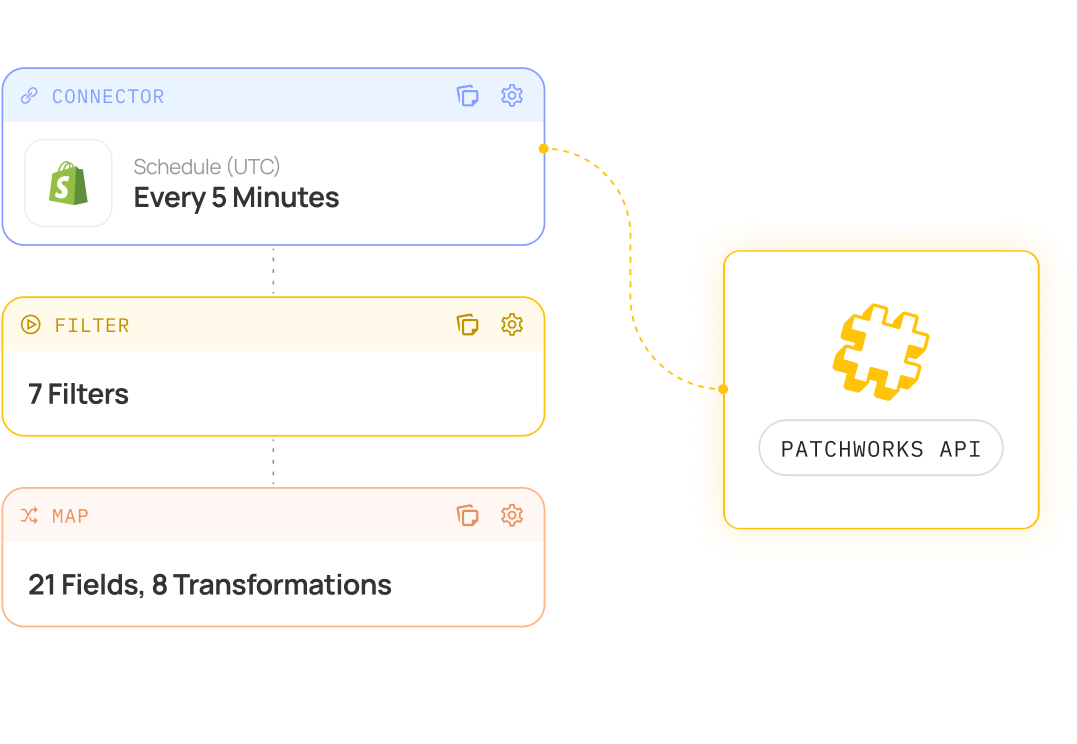
Connect Shopify and Shopify Plus to your ERP, 3PL, marketplaces and CRM with Patchworks, Shopify’s only certified technology partner for integrations.
Patchworks connects Sage 300, formerly Sage Accpac, to your ecommerce platforms, marketplaces, EDI partners, warehouses and CRM. Orders, stock, customers and invoices move automatically between Sage 300 and every channel through its Web API, on an integration platform (iPaaS) trusted by 1,700+ brands.
Looking for Sage 300 Construction and Real Estate (CRE)? That’s a different product. This page covers Sage 300 for distribution, wholesale, retail and ecommerce.
Supporting complex retail operations across fast-growing brands


| Item |
|
|---|---|
| Sage product |
Sage 300 (formerly Sage Accpac): Standard, Advanced and Premium editions. Not Sage 300 CRE
|
| Sage 300 API |
Sage 300 Web API: RESTful, OData-based, JSON
|
| How Patchworks connects |
Through the Sage 300 Web API, published at a secure HTTPS endpoint on your Sage 300 server, with a connector built using Connector Builder or AI Studio
|
| Authentication |
Your Sage 300 Web API credentials, held securely in Patchworks
|
| Sage 300 records |
Customers, sales orders (Order Entry), items and stock by location (Inventory Control), shipments, invoices, receipts and credit notes, across multiple companies and currencies
|
| Connects Sage 300 to |
Any system with an API or MCP server
|
| Triggers |
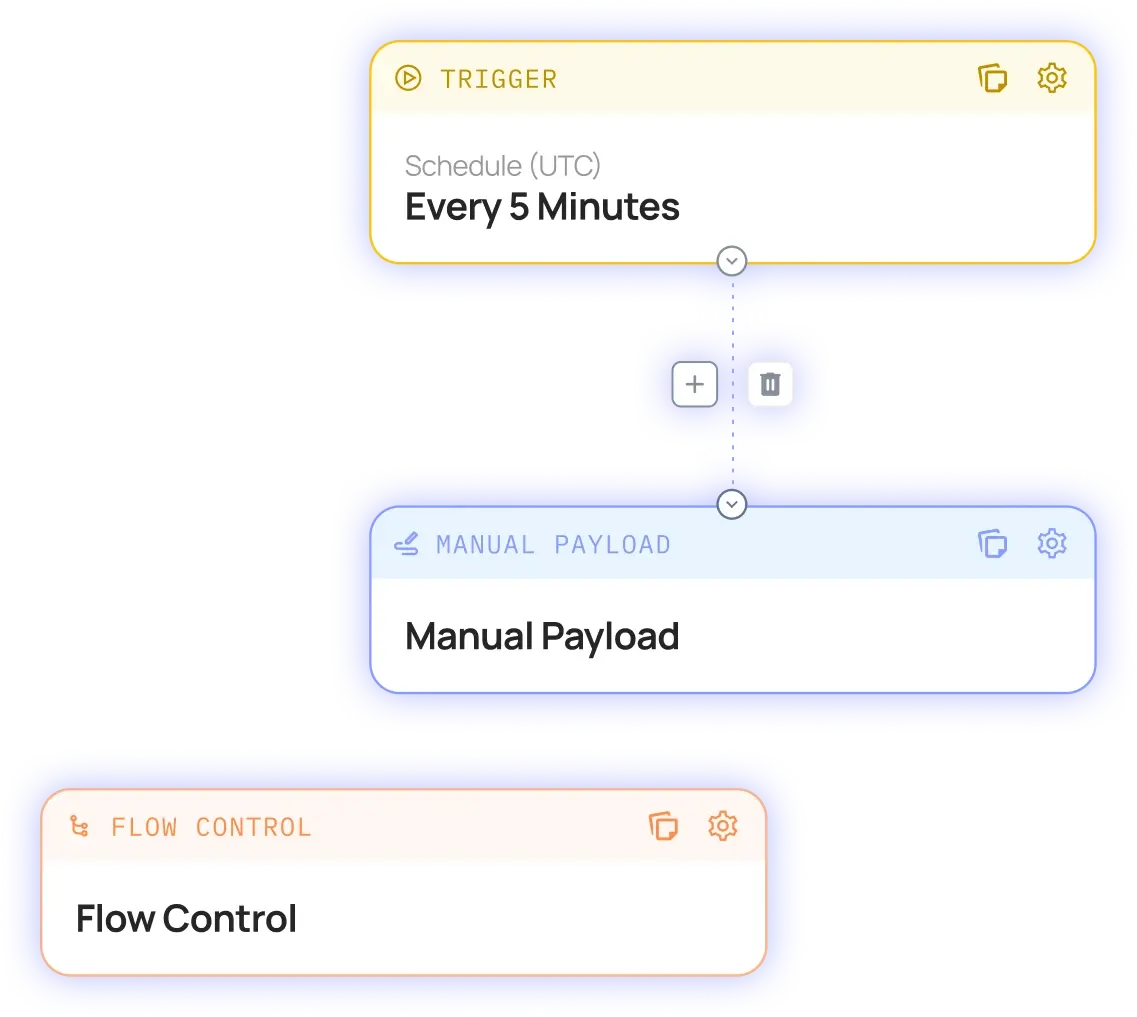
Scheduled, webhook and event-driven process flows
|
| Security |
SOC 2 and ISO 27001
|
| Pricing |
Based on connected systems and monthly operations, with unlimited users
|
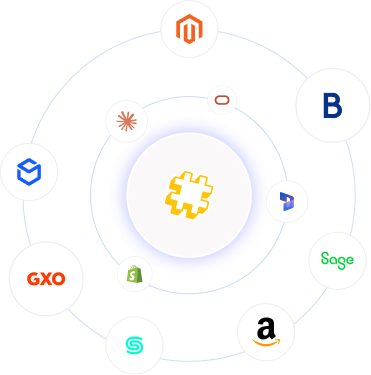
Connect Shopify and Shopify Plus, Adobe Commerce (Magento) or BigCommerce to Sage 300. Online orders arrive in Order Entry with the customer, pricing and tax, and stock flows back by location. Expansion stores and Shopify Markets can each be routed to the right Sage 300 company and currency.
Bring Amazon and eBay orders into Sage 300, and connect retailer dropship networks such as Rithum (Dsco and OrderStream) and Virtualstock. Every channel sells from the same Sage 300 stock.
Send Sage 300 orders to Descartes Peoplevox, GXO or ShipBob, and bring shipments and stock movements back by location, so Sage 300 always reflects what has actually shipped.
EDI
Trade with retailers and distributors by EDI without re-keying. Purchase orders from your trading partners become Sage 300 sales orders, and ship notices and invoices go back automatically, so you meet each partner’s requirements from the same integration layer as your storefront.
Connect Sage 300 to Salesforce or HubSpot so sales teams can see orders, balances and credit status, and closed deals become Sage 300 sales orders without re-keying.
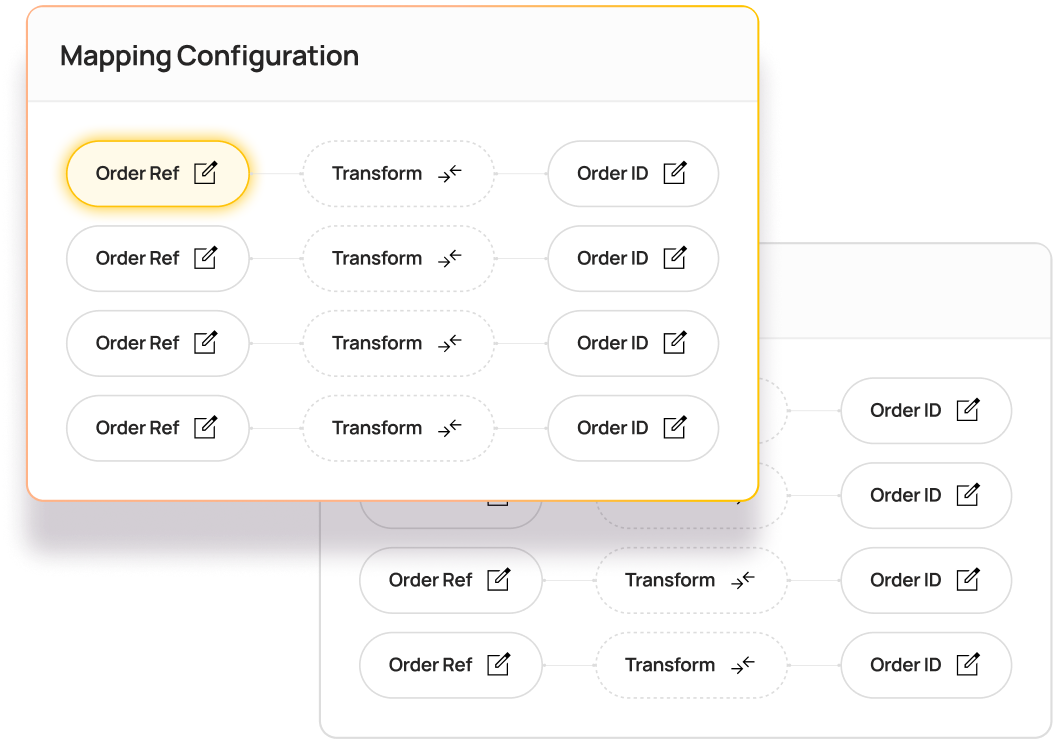
Sage 300’s Web API is exactly the kind of system AI Studio is built for. Describe the integration in a prompt, or upload an API specification or JSON file, and AI Studio’s Implementation Agent builds the connector, process flows and field mappings for you, typically giving you a working model in minutes.
| Item |
Details
|
|---|---|
| Orders |
Storefront, marketplace and EDI orders are created in Sage 300 Order Entry with the customer, items, pricing and tax.
|
| Stock and warehouses |
Stock levels from Sage 300 Inventory Control are published to every channel by location, so each one sells what you can ship.
|
| Multi-company and currency |
Each storefront, market or brand is routed to the right Sage 300 company and currency, so international sales land in the right books.
|
| Customers and accounts |
Customers are matched to Sage 300 customer accounts, with their terms and price lists.
|
| Shipments and tracking |
Shipments are sent back to storefronts with tracking numbers, and ship notices go to EDI trading partners.
|
| Invoices, receipts and credit notes |
Invoices, payments and refunds are reconciled in Sage 300, so finance sees every channel in one ledger.
|
A Sage 300 integration is tested when orders spike, a retailer sends a wave of EDI purchase orders or a new market goes live.
Sage 300 integration connects Sage 300 to the other systems your business runs on, such as your ecommerce platform, marketplaces, EDI trading partners, warehouse and CRM, so orders, stock, customers and invoices move automatically. It replaces manual entry and file transfers, so Sage 300 always reflects what’s happening across every channel. It’s part of our wider Sage integration range.
Yes. Since Sage 300 2017, Sage 300 has included a Web API, a RESTful, OData-based API that returns JSON and runs alongside Sage 300 on your IIS server. It uses Basic authentication and needs some initial configuration before it’s used. Sage also offers SDKs for building Sage 300 screens and customisations, which is a different thing. Patchworks connects to the Web API at a secure HTTPS endpoint on your server.
Sage 300 is the same product as Sage Accpac: Sage dropped the Accpac name in 2012. Sage 300 CRE is different. Sage 300 Construction and Real Estate is a separate product for contractors and property businesses, with its own Web API, and this page doesn’t cover it.
Connect Shopify through the Patchworks app and Sage 300 through its Web API, then configure the flows. Shopify orders arrive in Sage 300 Order Entry with the customer, pricing and tax, and stock levels flow back to Shopify by location. Expansion stores and Shopify Markets can each be routed to the right Sage 300 company and currency. See our Shopify integration.
The same way: through an integration platform rather than a bespoke build for each store. Patchworks creates Adobe Commerce (Magento) or BigCommerce orders in Sage 300 Order Entry, and publishes stock and pricing from Sage 300 back to your store. Flows are configured on a visual canvas and tested in staging before go-live. See our ecommerce integrations.
Yes. Patchworks reads stock levels by location from Sage 300 Inventory Control and publishes them to your website, marketplaces and dropship partners, on a schedule or as stock changes. Every channel sells from the same stock, which prevents overselling. See inventory and stock synchronisation.
Patchworks receives purchase orders from your EDI trading partners and creates them as sales orders in Sage 300, then sends ship notices and invoices back in each partner’s format once orders ship. Because EDI runs through the same platform as your ecommerce and 3PL integrations, every channel shares the same stock and order data.
Yes, through Patchworks. HubSpot doesn’t offer a native Sage connector, so Patchworks fills that gap. Account teams see Sage 300 orders, balances and credit status in HubSpot or Salesforce, and closed deals become Sage 200 sales orders without re-keying. See our CRM integrations.
If you only need to connect one system to Sage 300, a specialist add-on can be enough. Businesses choose an integration platform such as Patchworks when Sage 300 needs to work with several storefronts, marketplaces, EDI partners, a 3PL and a CRM, because every connection then runs through one layer, with the same mapping, monitoring and error handling, instead of a separate add-on for each. Compare iPaaS platforms.
DO se a specialist add-on if Sage 300 only needs to connect to one other system.
DON’T add a separate add-on for every channel when Sage 300 needs to work with storefronts, marketplaces, EDI partners, a 3PL and a CRM.
Yes. Whether Sage 300 runs on your own servers or with a hosting partner, the Web API is published at a secure HTTPS endpoint for Patchworks to connect to. Sage 300cloud is earlier branding for Sage 300’s cloud-connected version, and it connects the same way through the Web API.
It depends on how many systems you connect and how much data moves between them. Patchworks pricing is based on the number of connectors and monthly operations. An operation is counted each time Patchworks sends or receives a data payload. Every plan includes unlimited users. See pricing.
First, the Sage 300 Web API is configured and published at a secure HTTPS endpoint, which your IT team or Sage business partner can do. Most teams then deploy their first flows within days, and more complex estates go live in weeks. You can implement in-house with support from Patchworks’ engineers, or work with one of our approved agency partners.
Yes, as long as it has an API or an MCP server. In AI Studio, describe the integration in a prompt or upload an API specification or JSON file, and the Implementation Agent builds the connector, process flows and field mappings, typically giving you a working model in minutes. You can also build connectors without code in Connector Builder.