TL;DR
Peak season readiness means your integration layer — not just your marketing — can handle a sudden, sustained surge in orders, stock movement, and data volume, whether that surge lands on Black Friday, in high summer, or at year-end. This guide sets out the four operational pillars that separate resilient retailers from those firefighting through their busiest trading window, and includes an interactive Peak Readiness Calculator so you can score your own stack against them.
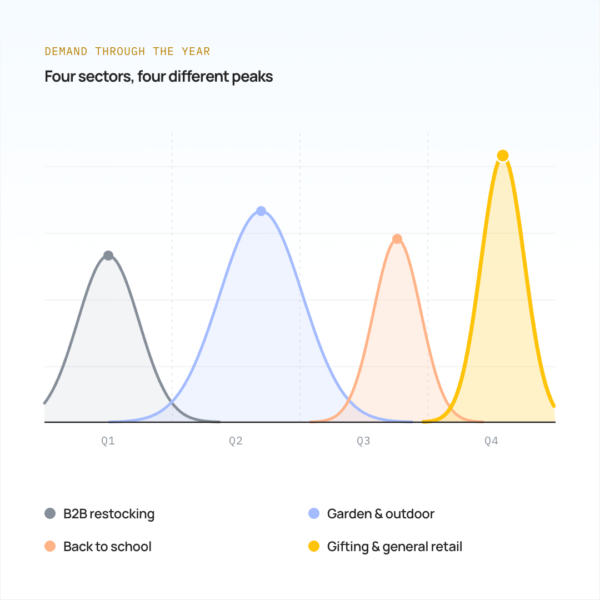
For most retailers, Black Friday and Cyber Monday are the sharpest version of a much bigger problem: a short, unforgiving window in which demand spikes far beyond what your systems handle on an ordinary day. The holiday season overall still accounts for roughly a fifth of annual US retail sales, concentrated into about eight weeks. For fashion and general merchandise brands, that spike lands in November. For garden and outdoor retailers, it’s typically May to July. For B2B distributors, it might be January restocking. The calendar changes; the operational stress test doesn’t.
Whichever week is your peak, the same underlying risk applies: when systems are disconnected, “silent failures” occur — inventory discrepancies, pricing errors, and order processing delays that erode margins and destroy customer trust long after the sale is made. This guide sets out the strategic framework to move from reactive firefighting to proactive operational resilience, whatever “peak” looks like for your business — plus an interactive calculator so you can score your own readiness before you need it.
What Counts as “Peak” for a Retailer?
Peak season is usually shorthand for “Black Friday,” but the underlying definition is broader and more useful: it’s any period where order volume, site traffic, or fulfilment demand significantly and predictably exceeds your baseline capacity. For most retailers, that includes BFCM — it’s the single largest, most universal peak in retail, and the sharpest test of infrastructure most brands will face. But it isn’t the only one, and treating it as the only one is how retailers in less BFCM-driven categories under-prepare for their actual busiest week.
| Sector | Primary peak window | Why |
|---|---|---|
| Fashion & Apparel | BFCM + Boxing Day | The two biggest single discount events of the year, with demand concentrated into days rather than weeks |
| Home, Garden & Outdoor | Spring / early summer | Seasonal buying tied to weather and planting/outdoor seasons, not the retail calendar |
| Health & Beauty | BFCM + Mother’s Day / Valentine’s | Gifting spikes recur throughout the year, not only in Q4 |
| Food & Beverage | Pre-Christmas + Valentine’s | Perishability adds a fulfilment-speed dimension that pure BFCM retailers don’t face |
| B2B Distribution & Manufacturing | Year-end / Q1 restocking | Demand is driven by customers’ fiscal and inventory cycles, not consumer shopping habits |
Whatever week it lands on, the operational stress test is the same: can your integration layer hold accurate, real-time data across every system while order volume runs at 5–10x normal?
The Peak Season Reality Check
Two different data sets tell the same story: peak season keeps growing, and the operational risk grows with it.
On the demand side, US shoppers spent $257.8 billion online across the 2025 holiday season, up 6.8% year-over-year, with Cyber Monday alone accounting for $14.25 billion and Black Friday $11.8 billion — both records (Adobe Analytics). The holiday season overall still represents roughly a fifth of annual US retail sales (NRF), concentrated into around eight weeks.
On the infrastructure side, Patchworks’ own research into retail operations highlights the structural risk retailers carry into that window:
- System Fragmentation: the average retailer manages 13.6 different applications, creating a complex web of data that must be synchronised in real time.
- The Inventory Gap: 40% of retailers cite inaccurate inventory and product data as their primary operational hurdle.
- The Manual Burden: 45% of retail professionals spend more than half their week on manual data tasks — a dependency that becomes most costly exactly when order volume, and the price of a mistake, is highest.
The Peak Readiness Audit: Diagnosing Technical Debt Before It Costs You
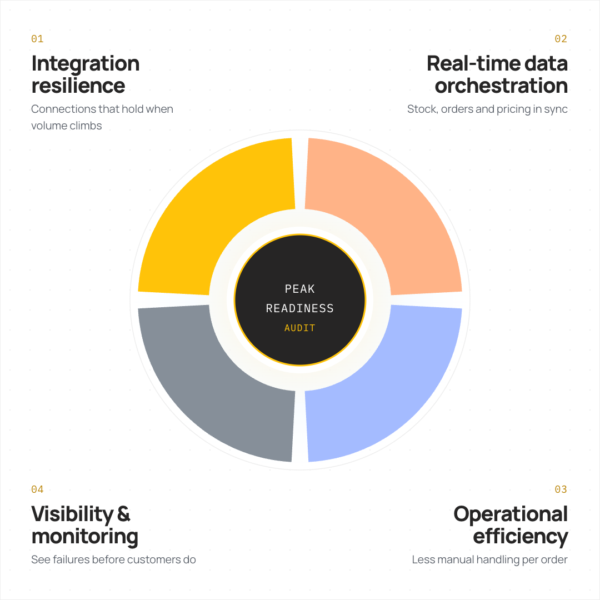
Whatever week your peak lands on, the same four pillars determine whether you spend it selling or firefighting.
1. Integration Resilience
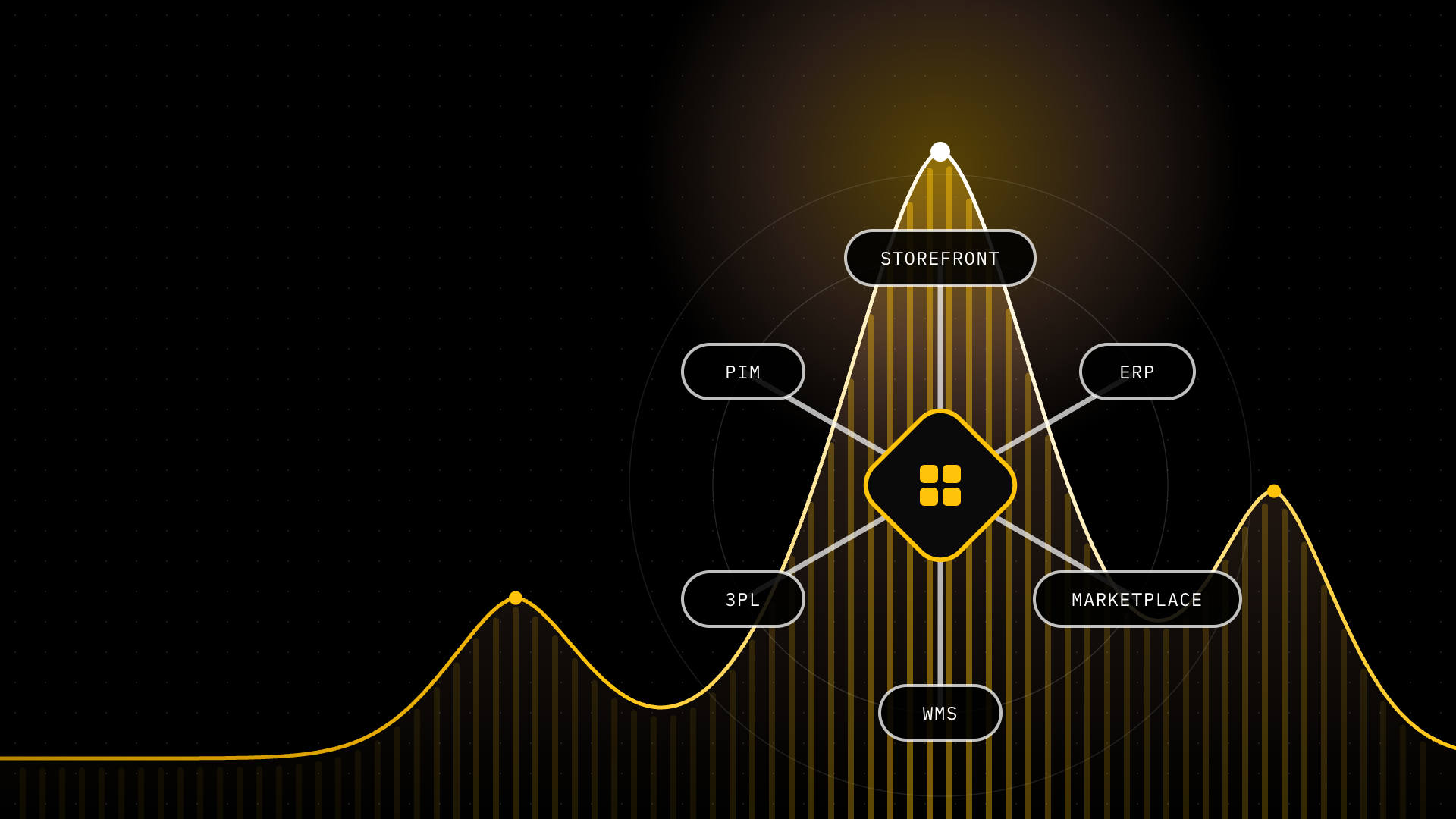
- Do: connect your core systems — ERP, storefront, WMS — through a central integration layer that can absorb and buffer load spikes.
- Don’t: rely on point-to-point scripts that were never designed to handle 5–10x normal transaction volume.
Risk: fragile, point-to-point integrations are prone to “ghost orders” and catastrophic data loss exactly when order volume peaks.
2. Real-Time Data Orchestration
- Do: sync inventory, pricing, and stock data across every channel — web, marketplaces, social commerce — the moment a sale happens.
- Don’t: let discrepancies between your ERP and storefront surface only when a customer complains.
Risk: retailers lose significant revenue to overselling and marketplace inconsistencies during peak periods when this isn’t automated.
3. Operational Efficiency
- Do: automate discount propagation, pricing updates, and fulfilment routing so your team’s time goes to growth, not data entry.
- Don’t: depend on manual CSV imports or spreadsheet reconciliation to keep pricing and stock consistent across 20+ storefronts.
Risk: manual workflows during peak periods push error rates as high as 35%.
4. Visibility & Monitoring
- Do: give your team and your customer service desk a single dashboard showing the health of every system connection and order in real time.
- Don’t: wait until the week before your peak to run a load test — or skip it entirely.
Risk: you cannot fix what you cannot see, and by the time a failure is visible externally, it’s usually already cost you the sale.
How ready is your commerce stack for Black Friday?
Three short steps on your trading profile, inventory, returns and integrations. You’ll get a readiness score and the priority areas to fix before peak hits — plus what to do about each one.
The Peak Readiness Roadmap: A 6-Month Countdown to Your Peak
Peak readiness is a strategic marathon, not a sprint — regardless of which calendar week your peak actually falls in. Count backward from your own peak window using this timeline:
- Phase 1 — Strategy Review (6 months out): audit your current commerce stack to identify fragmented integrations, legacy middleware, or brittle connections likely to fail under pressure.
- Phase 2 — Infrastructure Testing (3–4 months out): run rigorous load testing and validate ERP concurrency limits to find your actual breaking point before your customers do.
- Phase 3 — Operational Prep (1–2 months out): automate pricing workflows and confirm inventory synchronisation is genuinely real-time across every storefront and channel.
- Phase 4 — Final Weeks (launch): implement a code freeze to prevent last-minute bugs, confirm every monitoring dashboard is live, and make sure the team is trained on incident response before, not during, your peak.
Proof Point: How Castore Transformed Peak Performance
Global sportswear brand Castore used Patchworks to redesign its pricing architecture and eliminate the manual bottlenecks holding back its global growth during peak trading.
- The Challenge: pricing updates were manual and relied on slow CSV imports, taking 5 hours to update across global storefronts.
- The Solution: Patchworks as a retail-first integration layer to automate data orchestration and stabilise ERP concurrency.
- The Results: pricing error rates dropped from 35% to 1–2%; update times fell from 5 hours to 2–3 minutes; 35 global Shopify storefronts supported simultaneously during peak demand.
Frequently Asked Questions About Peak Season Readiness
What is peak season readiness for a retailer?
Peak season readiness is the operational and technical preparation needed to handle a period — Black Friday, summer, or year-end restocking — when order volume and system load significantly exceed normal levels, without inventory errors, pricing mistakes, or fulfilment delays.
Is Black Friday the only peak season for retailers?
- Do: treat “peak” as whatever period drives 5–10x your normal order volume — for fashion that’s usually BFCM, but for garden and outdoor brands it’s often spring/summer, and for B2B distributors it can be Q1 restocking.
- Don’t: assume a BFCM-only readiness plan covers your actual busiest week if you operate in a different vertical.
How do I calculate my own peak readiness score?
Use the interactive Peak Readiness Calculator on this page to score your stack across the four pillars above: integration resilience, real-time data orchestration, operational efficiency, and visibility & monitoring. Your live score appears immediately; a full PDF breakdown is available afterward.
What causes ecommerce systems to fail during peak trading?
Most failures aren’t a single system crashing outright — they’re integration failures. A stable storefront and a stable ERP don’t guarantee a stable connection between them; that connection is usually what breaks first under load, and the failure often isn’t visible until orders stop flowing correctly.
How far in advance should I start preparing for peak trading?
- Do: start your strategy review roughly six months before your peak window, with infrastructure load testing 3–4 months out and a code freeze in the final weeks.
- Don’t: leave load testing until the month before — this is where most avoidable failures originate.
What’s the difference between point-to-point integration and an iPaaS during peak?
Point-to-point integrations connect systems directly and tend to work for one or two connections, but become fragile and hard to maintain as more are added. An iPaaS (integration platform as a service) sits centrally between all your systems, buffering load and translating data consistently, which scales far better under the transaction spikes peak trading creates.