Patchworks vs. Alumio
Alumio’s config-first platform hands you a blank canvas and expects you to build the retail logic yourself. Patchworks hands you commerce logic and an AI Studio that builds your flows from a prompt — so you launch in weeks, not months.
Need help with switching to Patchworks?

Go Live in Weeks, Not Months — Without Alumio’s Manual Config Cycle
Alumio is a flexible, “config-first” platform, but flexibility often comes at the cost of speed and retail-specific intelligence. Patchworks provides a foundational integration layer with built-in commerce logic and AI agents, allowing you to bypass complex configurations and launch your retail stack in weeks, not months.
What makes Patchworks different?
- Pre-configured patterns and AI agents for complex commerce flows.
- Designed for high-growth retailers who need to scale without bill shock.
- Specifically engineered for the intense concurrency of the retail calendar.
Average Review Score on G2


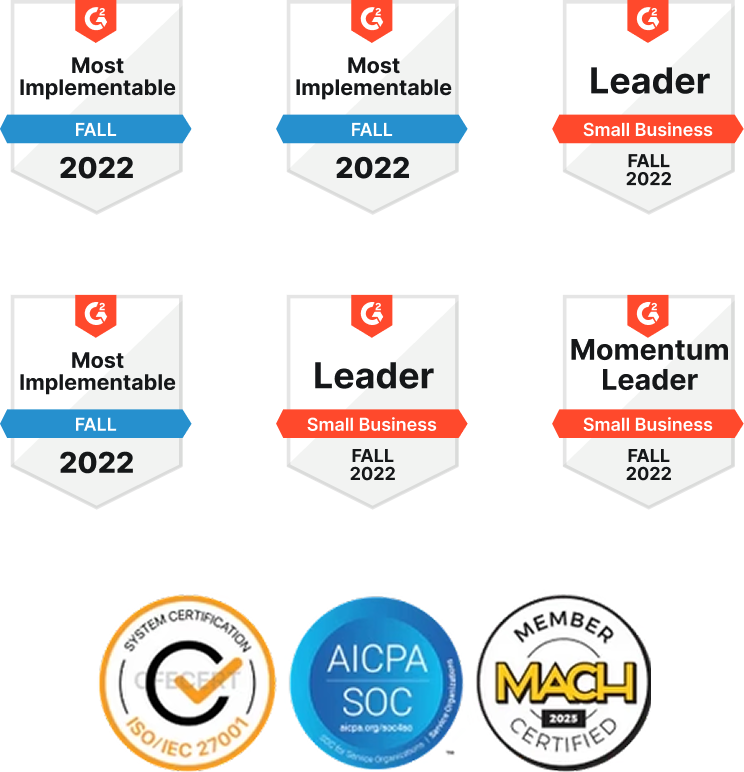
We’re independently rated by retailers on G2
4 Months
average ROI, independently verified on G2
98%
say Patchworks is a good partner in doing business
96%
likelihood to recommend
100%
positive product direction
Core key Differences
Real-time operational intelligence
Proactive issue resolution
Patchworks provides real-time operational intelligence. Monitor every flow instantly and identify exactly where a sync has stalled before it impacts your customers.
Retail-ready speed
Rapid retail connectors
Don’t get stuck in heavy “config-first” cycles. We provide pre-built retail blueprints and an AI-powered no-code Connector Builder that allow you to launch complex commerce integrations in weeks, not months.
Peak-trading resilience
Engineered for high-volume
Our infrastructure is battle-tested specifically for retail. We provide the auto-scaling power and operational confidence needed to handle millions of transactions during peak trading.
Quick comparison guide
| Comparison Factor |
|
Alumio |
|---|---|---|
| Industry Specialism |
Dedicated Multi-channel Retail
|
—
Generalist (Manufacturing/B2B)
|
| Logic Layer |
Pre-built Retail Entities (Orders/Returns). Plus, AI Smart Mapping
|
—
Manual "Config-First" Setup
|
| Operational IQ |
Real-time Flow Monitoring & Alerts
|
—
Standard Logging & Auditing
|
| Speed to Value |
Rapid Deployment (Weeks) with AI Studio.
|
—
Configuration-Heavy (Months)
|
| Technical Barrier |
Low-Code/No-Code AI Empowerment
|
—
Developer-Led Configuration
|
| Peak Performance |
Built for Retail Concurrency
|
—
General SaaS Infrastructure
|















Supporting complex retail operations across fast-growing brands








Global brands rely on Patchworks
“Patchworks were instrumental in shaping our architecture in the right way, helping us adopt MACH principles”

Navid Jilow
Director of Technology, Belstaff
97
%Reduction in Error Rates

“What surprised me was just how effortless it was. Once the data was prepared properly, Patchworks moved it into Shopify incredibly fast.”
Andy Richley
Head of Tech, Castore
91
Total Managed Flows

“Patchworks offers a great portfolio of integrations and are working towards many more.”
Paula Abisolo
Omni-Channel Delivery Lead, Mint Velvet

“Patchworks acts as our central plug socket, allowing us to move away from fragile, temporary scripts and fully unify our tech stack.“
Kees Kraakman
Head of Digital Operations, MR MARVIS
Frequently asked questions
A config-first platform like Alumio gives you the building blocks and expects you to assemble the retail logic yourself — mapping orders, inventory, and product data by hand, one Route and Transformer at a time. Patchworks starts from the opposite end. The retail patterns are already built in as blueprints, and where you need something genuinely new, AI Studio’s Implementation Agent can build a working process flow — triggers, connectors, and routing included — from a single plain-English prompt. Your team configures the exceptions, not the entire flow, and doesn’t need a developer team dedicated to integration work to do it.
Patchworks’ infrastructure is built and tested specifically around the retail calendar — Black Friday, Cyber Monday, and the other peak-trading windows where transaction volumes spike hard and fast. Auto-scaling and real-time flow monitoring — backed by AI Studio’s Health Monitor, which scans execution logs continuously and flags runtime errors before they become support tickets — mean issues get caught and resolved before they reach a customer, not after a batch job fails overnight. Alumio’s infrastructure is built for general SaaS-style workloads across whatever industries it’s serving, which is a reasonable approach for steady, predictable volume — but retail’s peak-season spikes are a different problem, and it’s the one we’ve built Patchworks around from day one.
Alumio typically prices on a task- or request-based model, which can be harder to predict as your integration volume grows — particularly around peak trading, when operations spike. Patchworks uses a transparent, tiered subscription model built around your connector count and monthly operations, so you know what a busy month costs before it happens, not after.
Retail is where Patchworks specialises, but that doesn’t mean it stops at the storefront. Patchworks connects directly to ERPs like NetSuite, SAP, Microsoft Dynamics, and Sage, along with WMS, 3PL, and finance-adjacent systems retailers already run alongside their commerce stack. The difference isn’t breadth of connectivity — it’s that every one of those connections comes with retail-specific logic already built in, rather than a generic connector you configure from scratch.
Most of the switching work isn’t rebuilding your integrations from nothing. AI Studio’s Migration Agent is built for exactly this: it reads the export files and data structures from your existing platform and converts them directly into working Patchworks flows. From there, our pre-built retail blueprints handle the common commerce patterns — orders, inventory, product data, customer records — so your team spends its time on what’s genuinely specific to your business. Get in touch and we’ll help you scope what that looks like for your stack.
Both platforms can technically handle multiple entities, but the practical difference shows up in day-to-day operations. Patchworks’ retail blueprints mean a new brand or region can reuse the same proven commerce logic instead of being configured from scratch each time — which matters when you’re trying to launch a new storefront in weeks, not months. Alumio’s flexibility is real, but it means every new entity typically starts as a fresh configuration exercise.